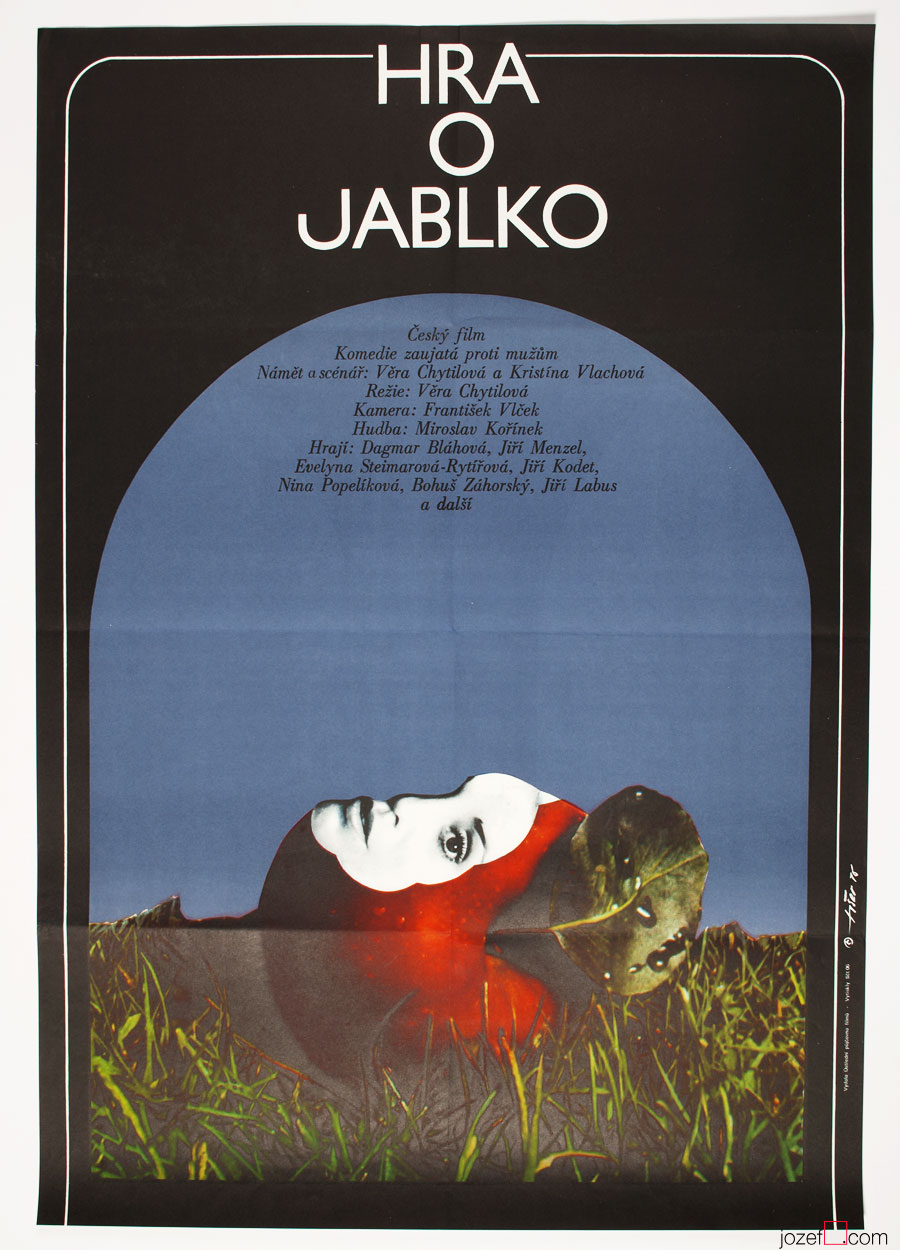
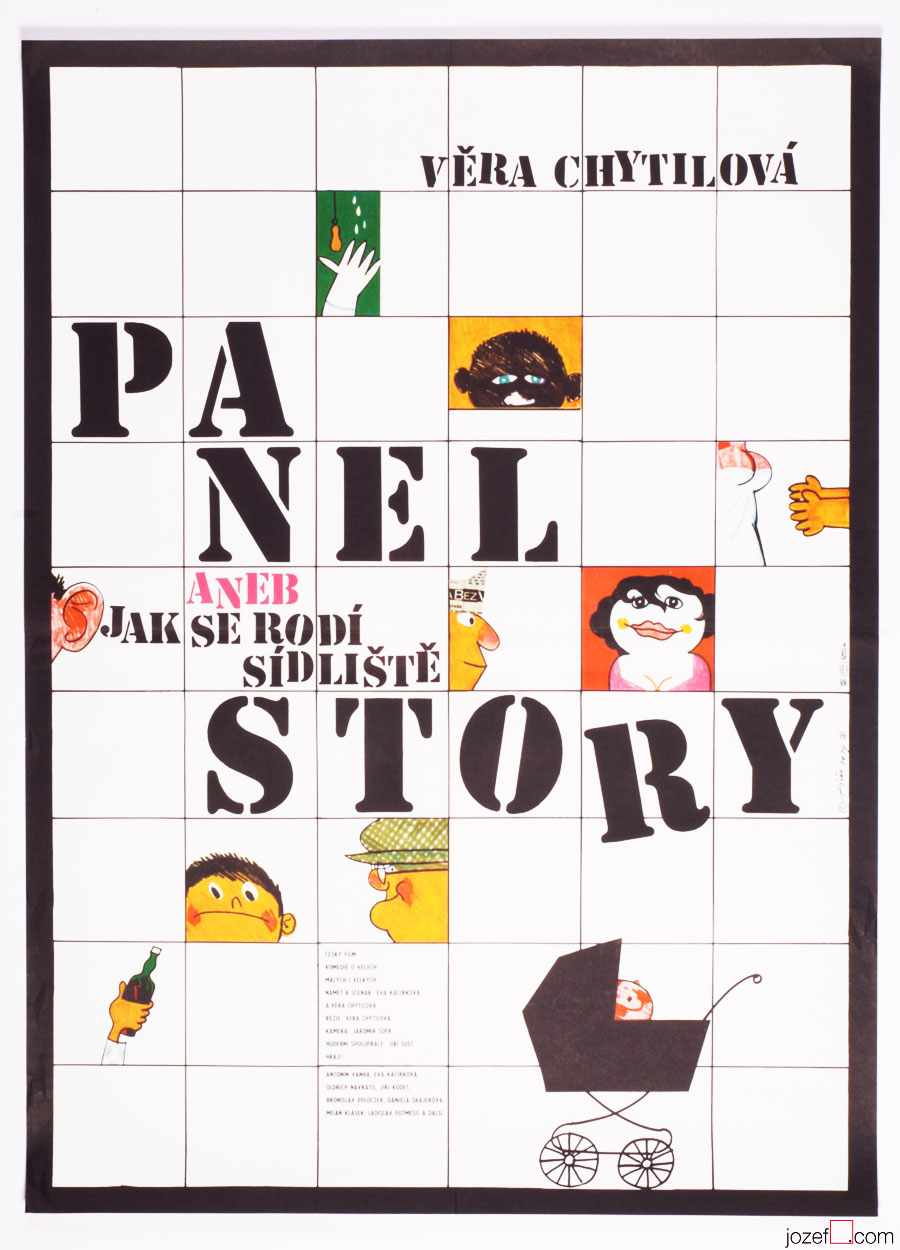
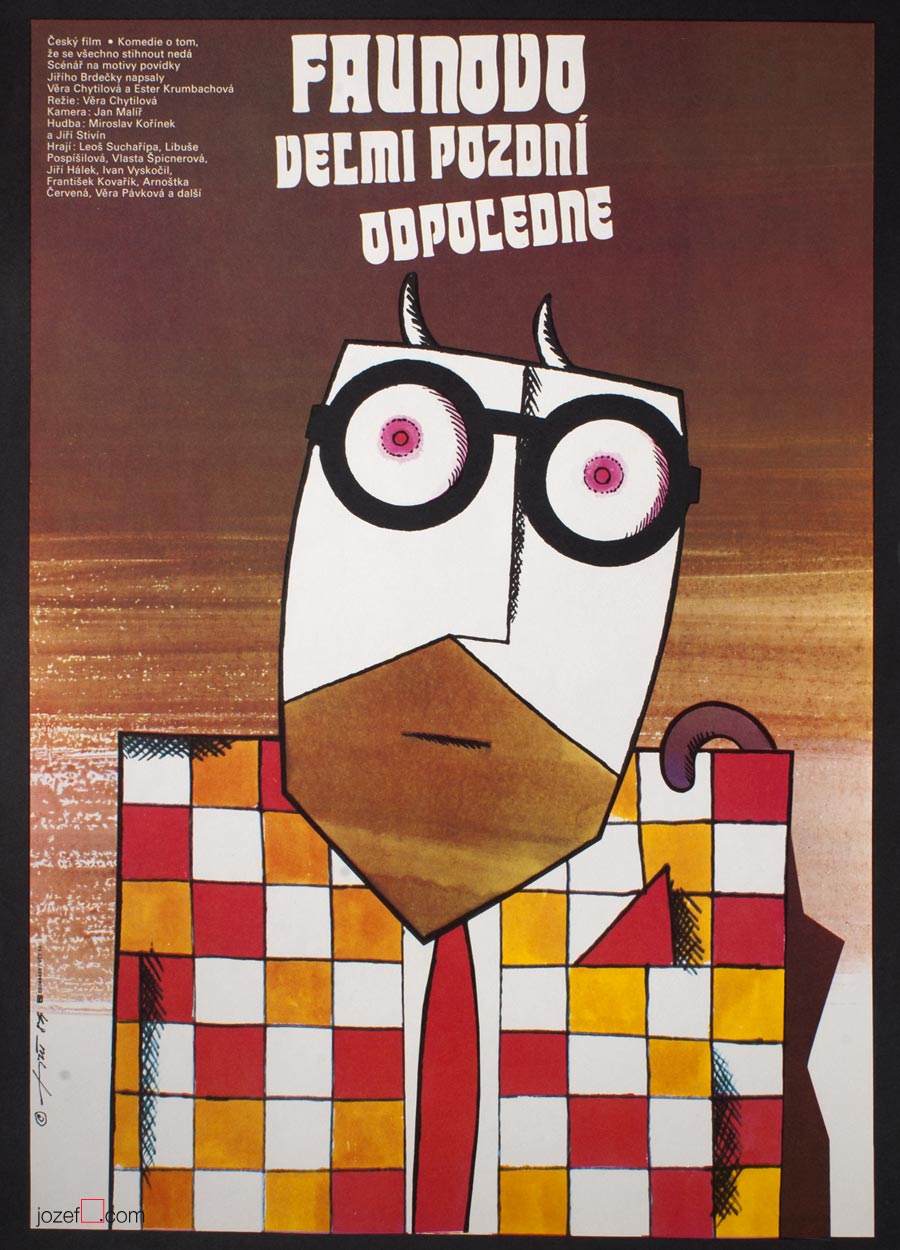
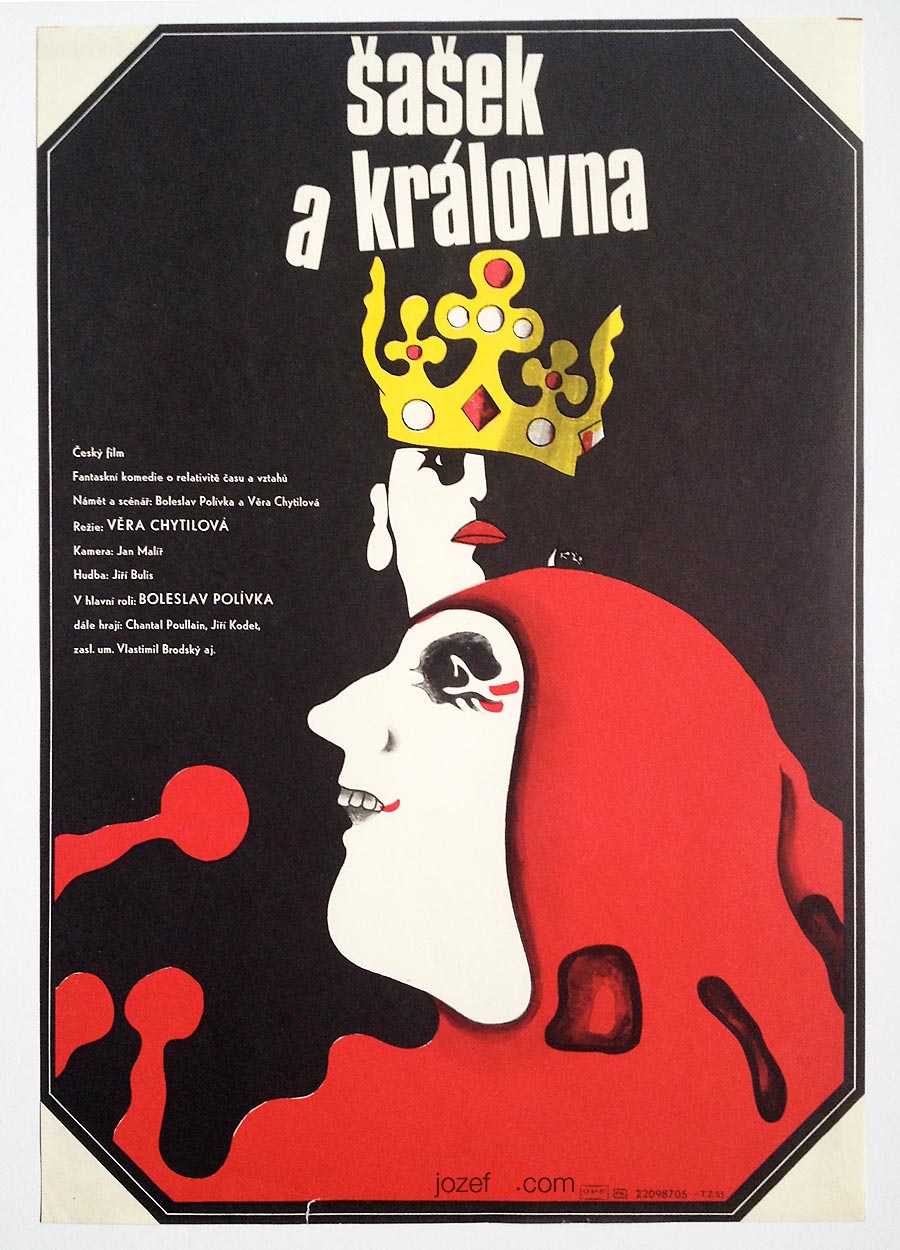
Poster art by Jaroslav Fišer for Věra Chytilová’s films.
We can hardly hide our excitement about BFI’s wonderful retrospective of one of the most innovative Czech filmmakers Věra Chytilová. It is also a very good opportunity to introduce the work of Jaroslav Fišer, prolific graphic designer and author of several posters for her films.
Jaroslav Fišer studied at the Technical University in Prague and at the Academy of Arts, Architecture and Design, Prague, former Czechoslovakia. During 1959 – 1987 Jaroslav Fišer designed 104 movie posters and his poster for film The Apple Game won a Silver Hugo at the International Film Festival in Chicago, USA.
BFI’s tribute to the director is organised in collaboration with Czech Centre, London and Czech National Film Archive and is on from 1st March – 17th March 2015.
Movie posters designed for Věra Chytilová’s films:
The Apple Game movie poster by Jaroslav Fišer, 1976.
The Panel Story movie poster by Jaroslav Fišer, 1979.
The Very Late Afternoon of a Faun movie poster by Jaroslav Fišer, 1984.
The Jester and The Queen movie poster by Jaroslav Fišer, 1987.
Selection of movie posters by Jaroslav Fišer:
Please don’t wake me up movie poster by Jaroslav Fišer, 1962.
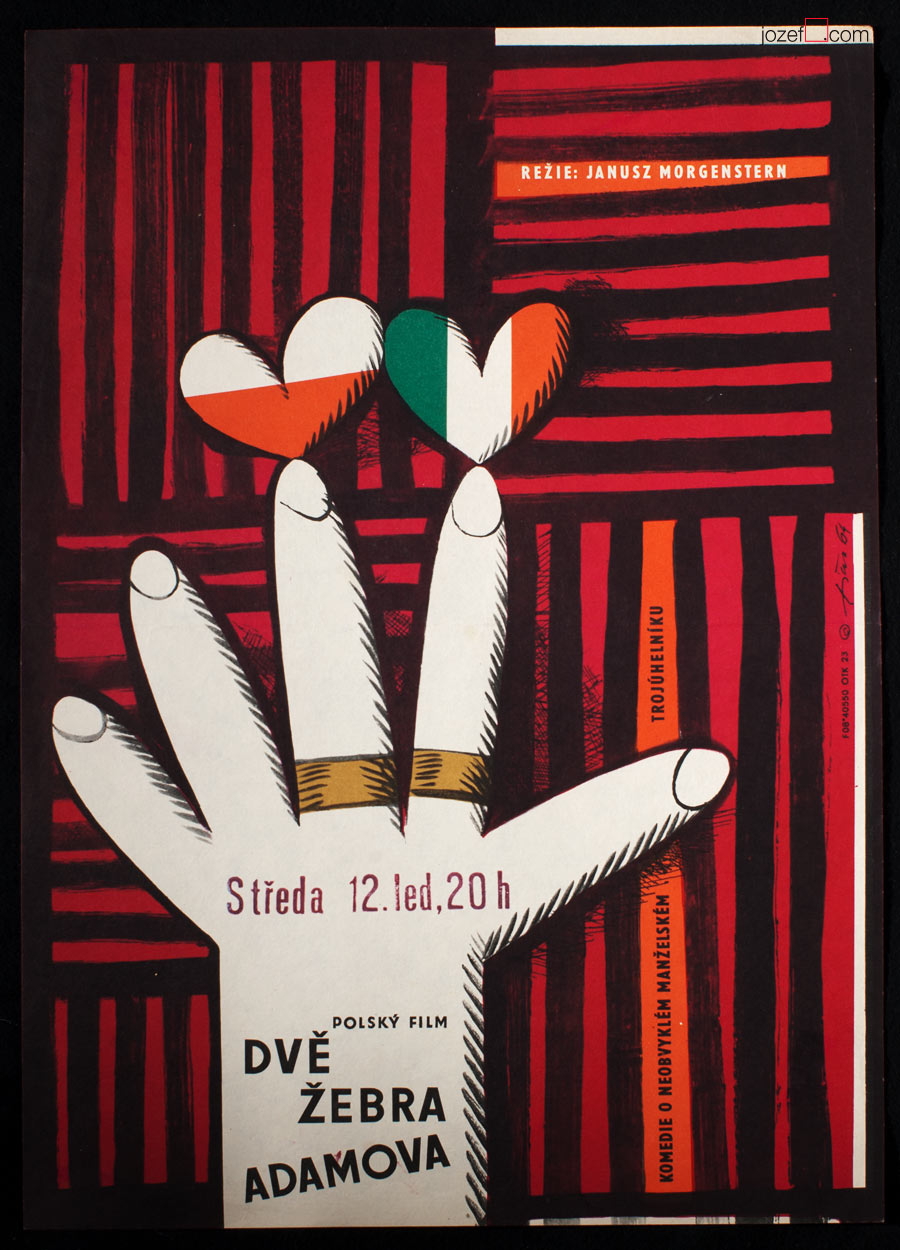
Adam’s Two Ribs movie poster by Jaroslav Fišer, 1964.
Check Passed: No Mines movie poster by Jaroslav Fišer, 1966.
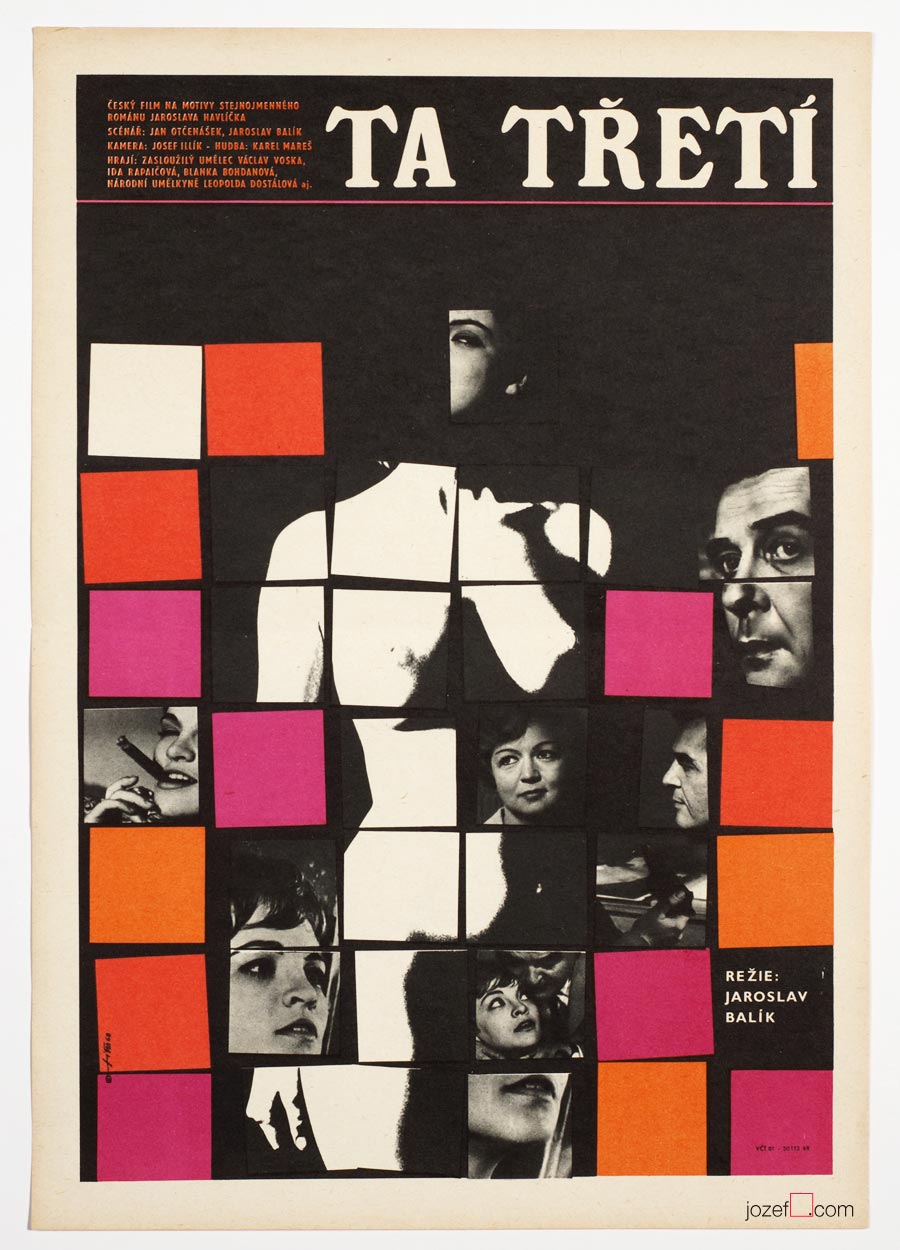
The Third One movie poster by Jaroslav Fišer, 1968.
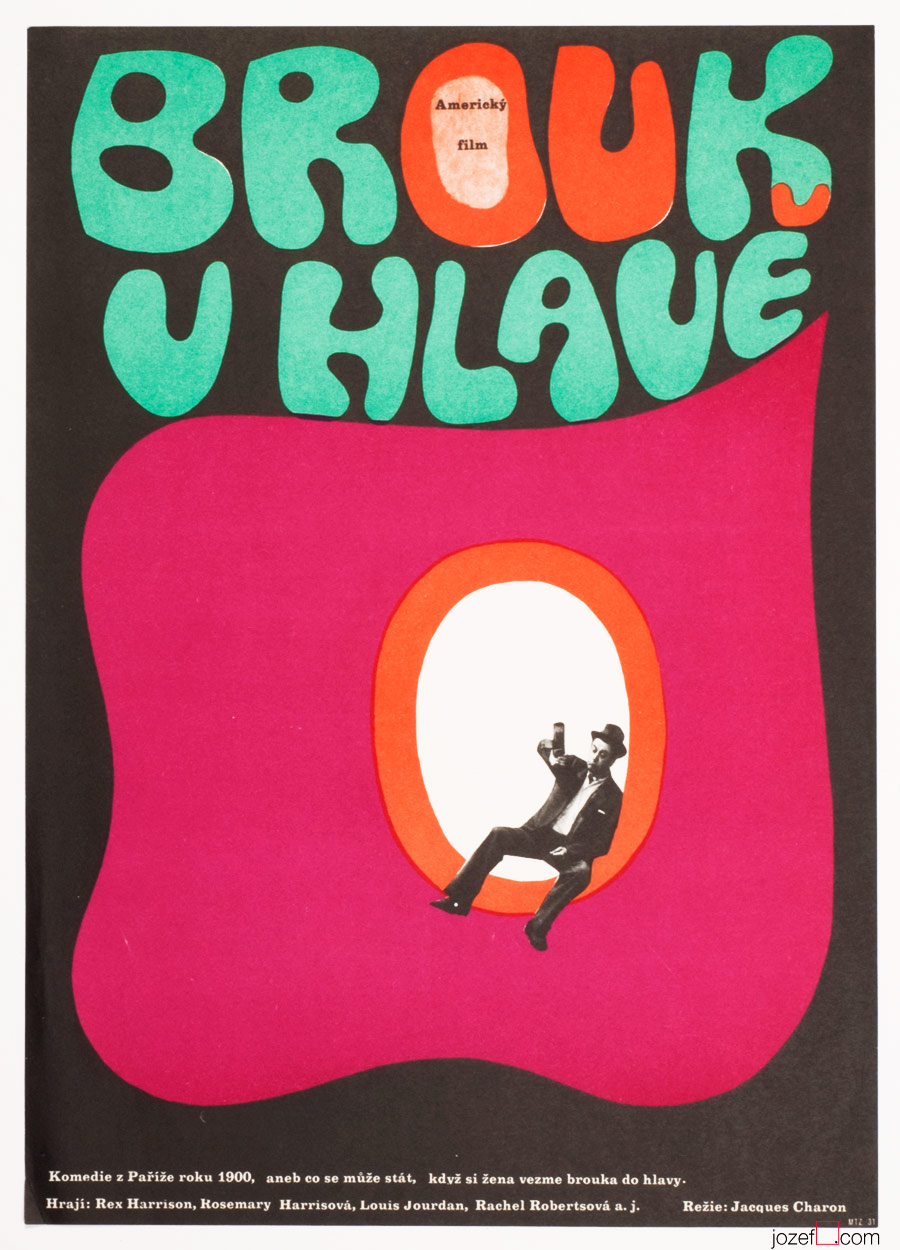
A Flea in Her Ear movie poster by Jaroslav Fišer, 1969.
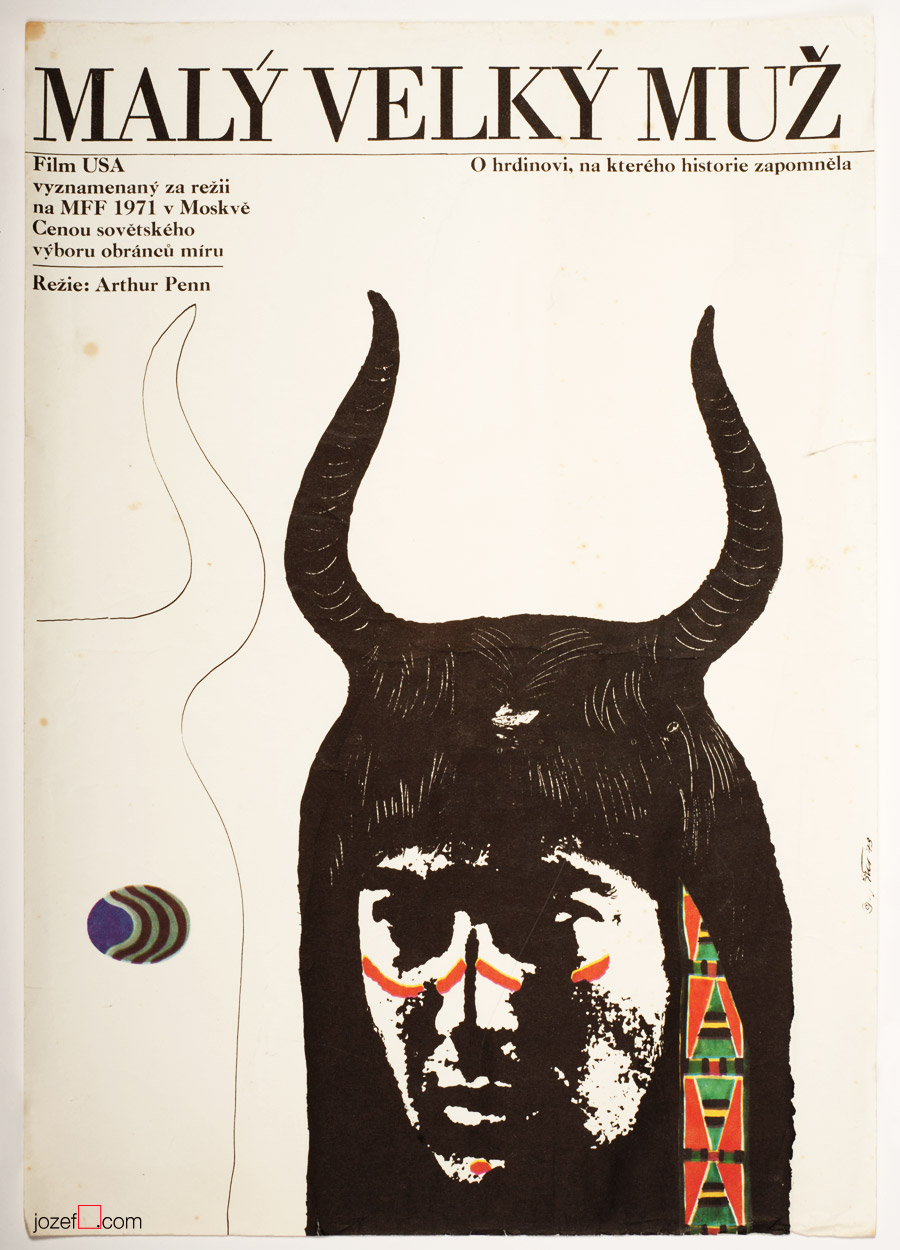
Litle Big Man movie poster by Jaroslav Fišer, 1973.
b. 12th of June 1930, České Velenice, Czech Republic
lives and works in Prague, Czech Republic
Education:
1949−1950, Charles University, Prague (Faculty of Pedagogy / Art?)
1950−1953, Academy of Arts, Architecture and Design in Prague (Pelc Antonín)
1953−1955, Academy of Fine Arts, Prague (Pelc Antonín)
Awards:
many, mostly for his animated films and book illustration (few shown bellow)
1974, caricaturist of the year, Montreal
1979, Golden Apple, Book Illustration Biennials, Bratislava
1985(?), Gold Medal, IBA, Leipzig
1988, Honorary Artist
Film posters designed: 19 (1959-1989)[^1]
***
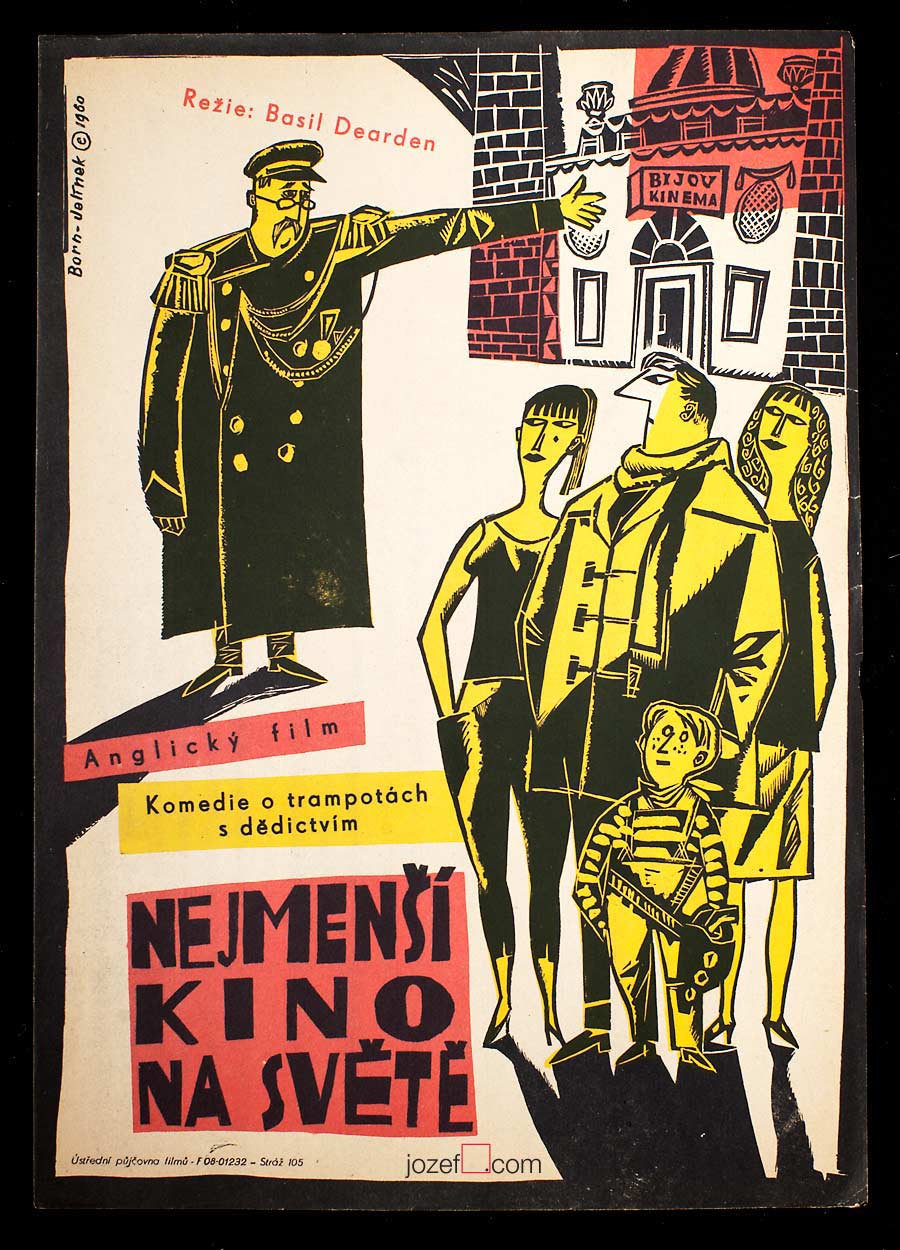
The Smallest Show on Earth – Adolf Born / Oldřich Jelínek, 1960.
***
To meet with the fantastic world of Czech artist Adolf Born in former Czechoslovakia was not as complicated. One only had to get born there and the ticket for his show was lying in front of you. His visual presence was absolutely everywhere. Book illustrations and television programme was provided for the smallest audience and for those older ones there were magazines covered with his caricatures. He has also made the older population interested into watching animated films for the children.
Adolf Born’s work is well known also to international spectator. His book illustrations (over 400 books) and animated films (by the 1980 he produced 45 of them)[^2] visited many countries and have taken part in many exhibitions. Humorous depiction is very characteristic in his work. Adolf Born is here to make you smile.
His film poster portfolio extends from early 1960s all the way to mid 1990s, with limited number designed. Adolf Born was preoccupied with other things. Film posters were possibly only other commission he was getting from the art union, where every illustrator/graphic had to be a member. Very few, but all very impressive. If the film poster was not made for the World War II film, it would definitely leave one with the grin on the face.
***
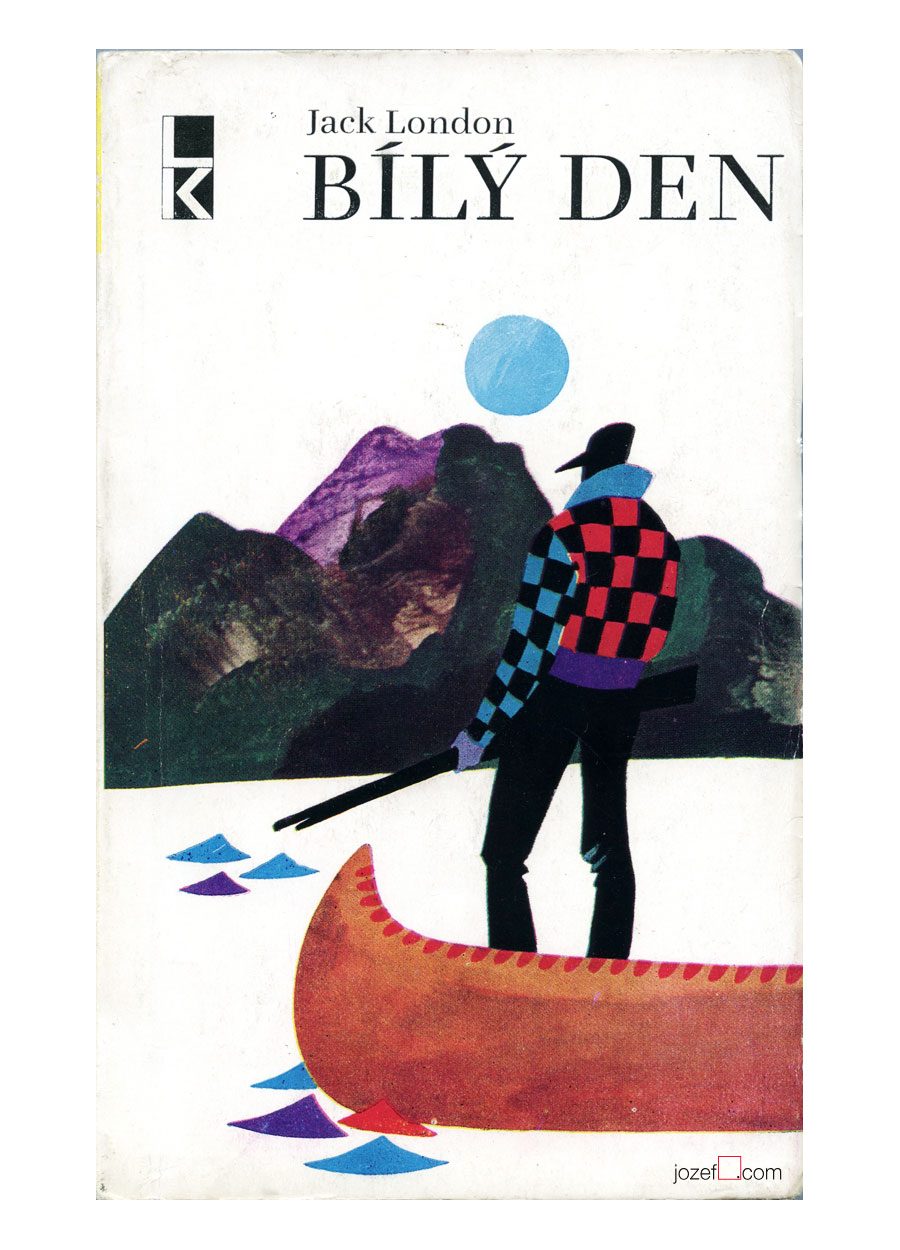
Front cover for the Burning Daylight / Jack London, illustrated by Adolf Born, 1970.
Book Illustration / Fine Art / Graphic Design / Typography
•••
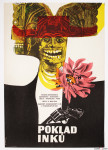
Legacy of the Incas movie poster by Josef Duchoň, 1967.
•••
b. 17th January 1929, Hostěradice (Prague-West), Czech Republic
Education:
1945 − 1949, State Graphic School, Prague (Richard Lander)
1949 − 1955, Academy of Arts, Architecture and Design, Prague (Karel Svolinský)
Art Groups:
Association of Czech Graphic Artists Hollar / Sdružení českých umělců grafiků Hollar (1957)
May 57 / Máj 57 (1964)
•••
Remember the day when we were unfolding our first large size movie poster. There was quite an excitement about the whole thing. Firstly it was about the size of a poster. All of our movie posters were in A3 size until then and we were astonished by the remarkable change in dimensions. Almost three times larger in size, movie poster offered much clearer detail and we had impression that printing was handled with slightly extra care. For common reason as we had later found out, A1 posters were bit more representative, they were used occasionally for poster exhibitions. Our second astonishment was the visual content.
•••
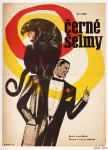
Black Panther movie poster by Josef Duchoň, 1966.
•••
Josef Duchoň’s lovingly puzzled collage for children’s adventurous movie set in the jungle (Black Mountain, 1972) was tenderly looking at us. What a joy! His movie posters have become one of our most favourite ever since. As we are describing the temperature, we could also mention, that we have very similar feelings towards Ever Alexander Půček‘s children’s posters.
Fascination of Josef Duchoň with children’s fantasy is in the right place and it was frequently reflected in his book illustrations. From 1959 he was co-working for the State publisher of children book as an illustrator. Early 1960s brought Josef Duchoň also to movie poster design. He created over two dozens of exceptionally impressive movie posters in period of almost 20 years[^1].
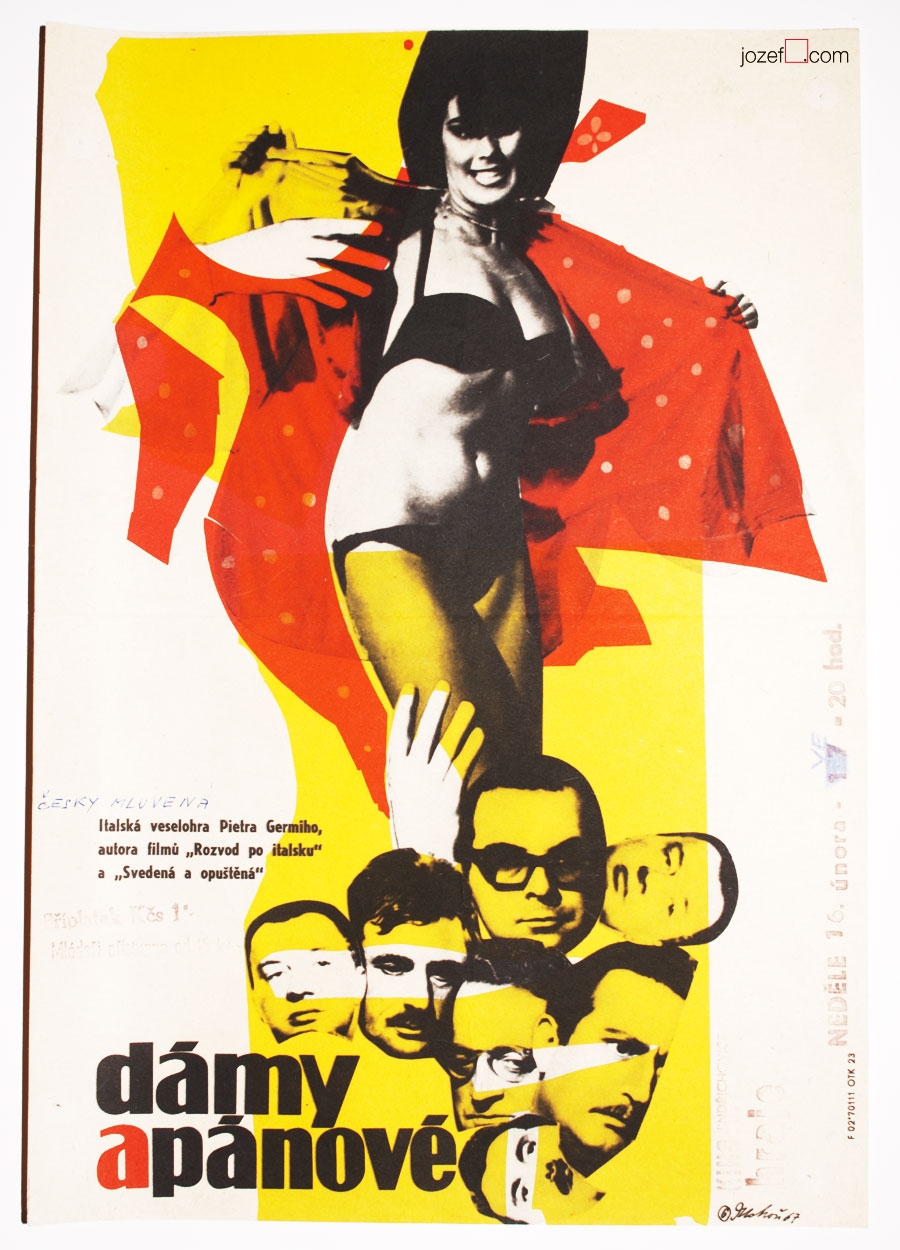
His work is extremely explosive, but not in a destructive way. On the other hand, Josef Duchoň is using the mixture of several artistic methods to reach viewer’s sensation. As a surreal artist his choice of collage technique is natural. Wonderful variation of live pastel colours achieved by the use of elegantly shaped and carefully placed woodcuts and his manipulation with objects is masterful. Thanks to monochrome cut outs and neat typography his movie posters are gaining quite significant depth and very vibrant character.
•••
The Birds the Bees and the Italians movie poster by Josef Duchoň, 1967.
•••
Josef Duchoň started exhibiting as a member of Association of Czech Graphic Artists Hollar in mid 1950s[^2]. (Important art group established in Prague, 1917.) Among 161[^3] Czech leading artists and graphic designers one can find other interesting poster artists such as Jiří Balcar, Adolf Born, Jan Kubíček, Jiří Šalamoun or Jaroslav Sůra to name few.
His first solo exhibition is dated to 1960. Liberal Czechoslovakia allowed Josef Duchoň to exhibit work also internationally. He took part in Biennale of Young Artists / Paris (France, 1963), Intergrafik / Berlin (Germany, 1965), Myth of the XXth Century / Coventry (UK, 1967) or in exhibition of Czech graphic artists in Oregon (USA, 1967). It seems that 1970s political changes stopped his exhibition activities for some time. There was no place for surreal, or any sort of abstraction in uniformed Czechoslovakia. However children’s publications were not censored, anything was possible in there and movie posters just very mildly[^4]. Josef Duchoň remained faithful to a fantasy.
Please see other fascinating posters designed by the artist.
•••
Resources:
Literature:
[^1]: Collective authors: Czech film posters of 20th century / The Moravian Gallery in Brno, Exlibris Prague, 2004. Josef Duchoň’s movie poster appears in year 1964 in their chronological catalogue. Our poster archive dates his movie poster activity up to 1981.
Online:
[^2]: abArt / Josef Duchoň / Big thanks to abArt for their research on invisible.
[^3]: cs.Wikipedia.org / Association of Czech Graphic Artists Hollar
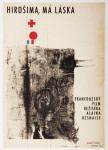
Hiroshima Mon Amour movie poster by Bedřich Dlouhý, 1963.
•••
b. 2nd August 1932, Plzeň (Pilsen), Czech Republic
Education / Pedagogue:
1949 − 1952, Specialised Ceramics school in Prague [^1]
1953 − 1959, Academy of Fine Arts, Prague (Karel Souček, Miroslav Hollý)
1990 – 1995, taught as professor at Academy of Fine Arts, Prague
Exhibitions / Awards:
up to 70s artist exhibited mostly in group shows across the Europe and Czechoslovakia
IV. Biennale de Paris, Musée d’Art Moderne de la Ville de Paris, 1965 (Awarded)
Art Groups:
Palette of Homeland (unofficial trans.) / Paleta vlasti (Hockey team consisting of several of artist’s friends)
Šmídrové (from 1954)
Confrontation / Konfrontace (from 1961, also Jiří Balcar)
Retarded / Zaostalí (from 1987)
Film posters created: 23 (1962-1971) [^2]
•••
[quote]”It may sound slightly disrespectful, but I am aware that I have a huge wide inventiveness and it makes and justifies me to take interest in many sectors of the art form.” [^3][/quote]
We are somewhere in mid fifties, in times of the most absurd terror upon democracy, constant greyness (Stalin’s monument in Prague and similar monsters are being raised across the Czechoslovakia) and bleak vision of existence. At the Academy of Fine Art in Prague the group of three interesting characters are meeting up. In the following words we will try to get closer to one of them.
[quote]”I started out as no one in that field and I was getting jobs for pretty inconsequential films from Romania, Bulgaria and Russia. They were productions of a third or second category. Because of the impressive quality of my work, film poster committee and ÚPF representatives (Formal state film distribution 1957 – 1991) were constantly adding to a momentum. It was reflected in good quality commissions for example for Fellini’s or Visconti’s magnum opus. I had to earn it.” [^4][/quote]
Bedřich Dlouhý was not such a tyro/novice at the beginning of his poster designing career as he explains in the quote above. By the time he started to design movie posters (1962) his portfolio contained already good body of art work, some important exhibitions and possibly something extra to it. To his future colleagues he must have been known as someone incredibly talented, the man without hesitation and very likely also without compromise.
•••
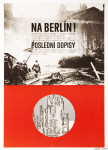
The Fall of Berlin movie poster by Bedřich Dlouhý, 1968.
•••
Neglecting the art
Among Bedřich Dlouhý’s best early pieces was exhibiting with art group Šmídrové. Their first exhibition in 1954 called Malmuzherziáda (varieté of painting, music and act as we understand) was made in the hardest times of Stalinist propaganda and Social Realism. Jan Koblasa (Czech artist and the member of the group) in the documentary made for Czech Television demonstrates the climate of late fifties as “very dark and grey”. Days in art school, as days among communist collaborators (“recommended working class was gaining high school diplomas to get legal access to Universities). Loneliness among them was unbearable.” [^5] No wonder that the three of them had met under such a circumstances. The group itself had very playful character with Neo Dadaist expression, hockey team and brass band.(Traditional folk music was not in favour of communist propaganda either, they had their own songs full of ridiculous slogans.)
[quote]“We loathed to look as an artists. We loathed to do things as an artists. We played hockey as part of our manifest Šmídrové. It may sound unbelievable, but the main thing was not to be an artist.” [^6][/quote]
After their first collaborative exhibition the group was officially established. Show or rather happening in 1957 called “Exhibition for one day” brought in too much controversy. Event had to be cancelled in duration, but it took place elsewhere the following day. On the day one Václav Havel (Czech writer, poet, ex-president) was giving the speech and on the second day he was already taking part with good number of other artists and musicians. Bedřich Dlouhý’s discharge from the Academy followed and lasted for a while.
Poster days and …
As for the film poster Bedřich Dlouhý was testing the new medium so intensely as anything else. His posters might appear visually settled and designed in quite minimalist style. In our examples even his typography might look very basic. Less is more, but not for Bedřich Dlouhý’s movie posters. They are full of hidden symbols and impressions even when they seem so simple.
Please come closer and let’s take a look at his The Fall of Berlin movie poster for instance. Fairly suggestive photograph of burning German capital is taking over the larger part of the poster. Pure catastrophe straight into ones face and quite rightly in monochrome. Message is very simple, anyone could guess what the movie poster offers. Bedřich Dlouhý does not want you to only see the movie but he also wants you to use the rest of your senses.
He takes your attention a bit further by exploring the large circle in the middle of the rich red bottom half of the poster. Red colour could represent the tons of blood and it is possibly also used to say big STOP. Almost like the red colour on traffic light advising one to stop, only the circle here is empty. Negating reality and pointing out that people will never learn. Or take the circle together with rectangularly shaped photograph. Two objects want to look little something like exclamation mark and set the message to following? STOP THIS! ? Similarly to the inner part of the circle that tells how it could all end up if we do not stop the wars. His movie poster for Hiroshima Mon Amour was designed in absolutely different style, but the poster also suggests close catastrophe.
•••
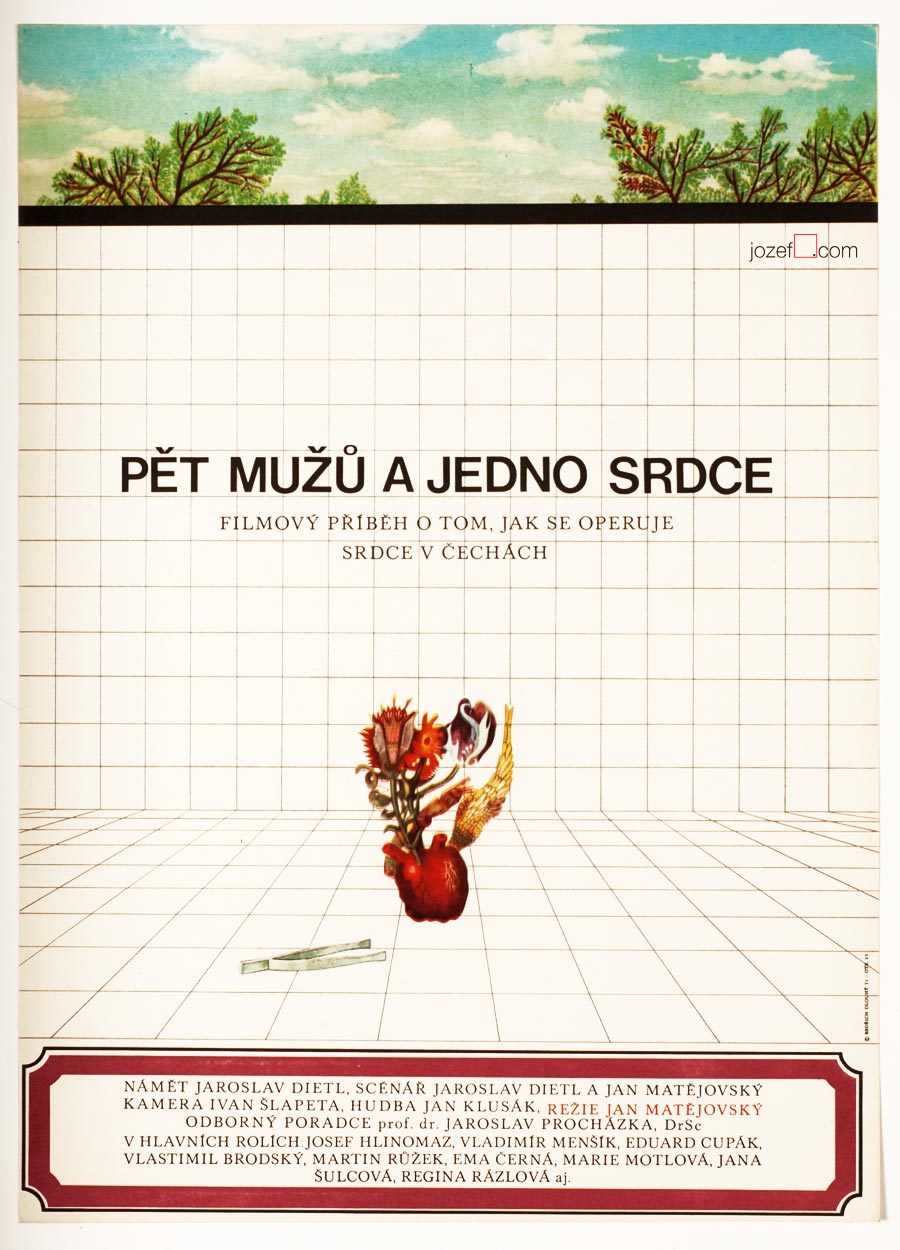
Five Men and One Heart movie poster by Bedřich Dlouhý, 1971.
•••
There are not only serious movie posters author has designed, he does not omit humour and irony (posters designed for The Pink Panther / Blake Edwards in 1966 or In the Woods / Akira Kurosawa in 1970 ) [^8] when necessary. He does not use any particular style either, but instead he approaches each individual poster very differently. The one connecting link we have found is that Bedřich Dlouhý’s curiosity does not like to leave things as they are. He wants to get right into to the core of his subject by bringing out the deepest details and he starts from there. He slips between the most complicated expressive forms (techniques frequently used in his paintings) [^9] to the most simple designs masterly. Visual illusion and yet with fantastically clear almost microscopic explanation.
Even thought Bedřich Dlouhý created some of the most iconic movie posters of the 60s, his unconventional approach to art form did not meet with the official agenda of the following decade. Similarly to many other artists in the beginning of the 70s he was forced to stop exhibiting and discontinued with designing movie posters.
Collective authors: Czech film posters of 20th century / The Moravian Gallery in Brno, Exlibris Prague, 2004.
[^2]: Flashback / Czech and Slovak Film Posters 1959-1989, ed. Libor Gronský, Marek Perůtka, Michal Soukup, Olomouc Museum of Art, 2004. (p.49). 25 movie posters to our knowledge.
Tomáš Vlček: Současný Plakát / Contemporary Poster, Odeon, Prague, 1976.
Československý Plakát / Czechoslovak Poster, exhibition catalogue, Olomouc (Czech Republic), 1967. One of the most important poster exhibition in the history of Czechoslovak poster design. We wish to return back to catalogue and give it a full blog post once we are ready.
Online:
[^1]: abArt / Bedřich Dlouhý / see for the full list of exhibitions. abArt takes always first place and star when it comes to research.
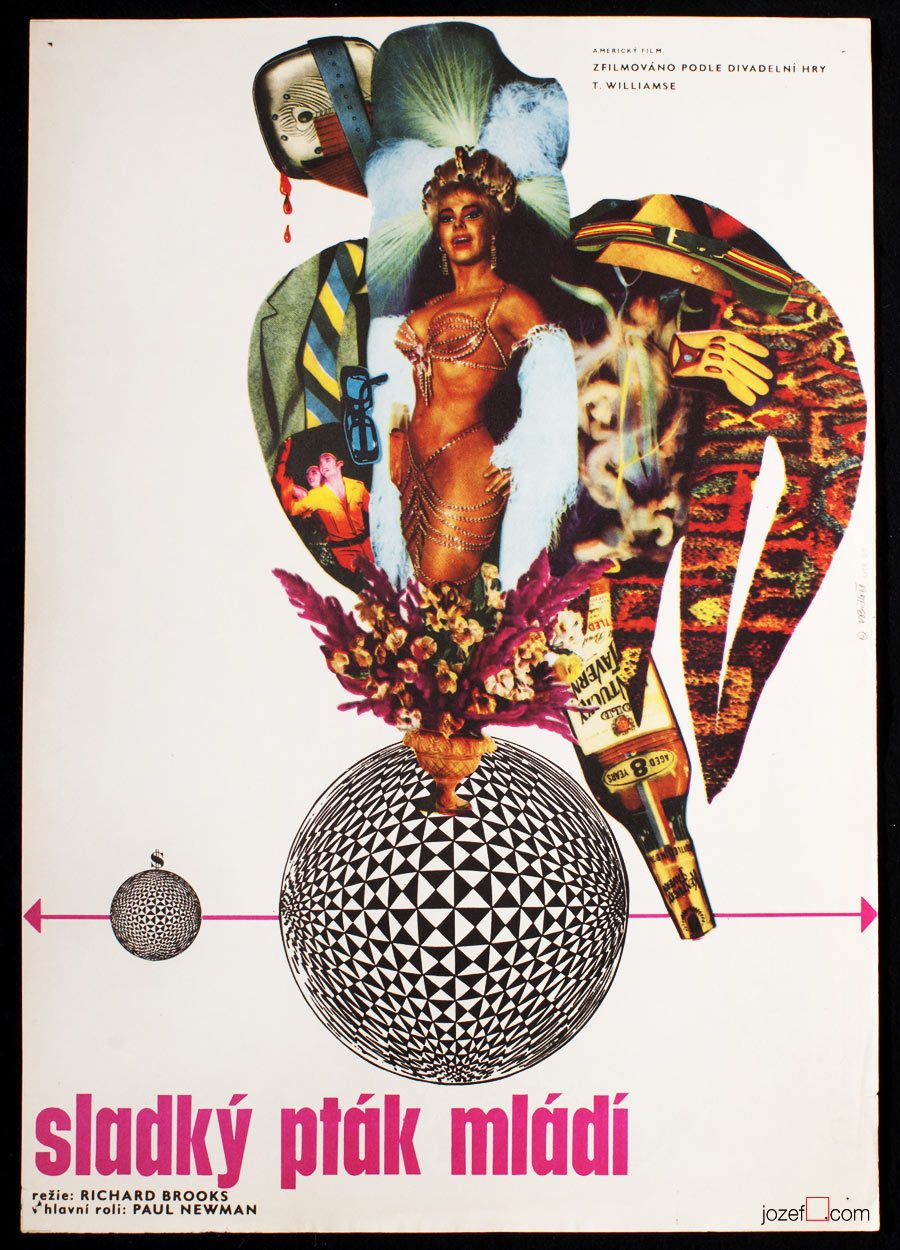
Sweet Bird of Youth movie poster by Vladimír Bidlo, 1962.
19th of October 1926, Kouřim, Czech Republic
1997, Prague, Czech Republic
Education:
1945−1950, State Graphic School, Prague
1945−1950, Charles University, Prague (Faculty of Pedagogy / Art?)
1945−1950, Academy of Arts, Architecture and Design in Prague (prof. F. Tichý)
***
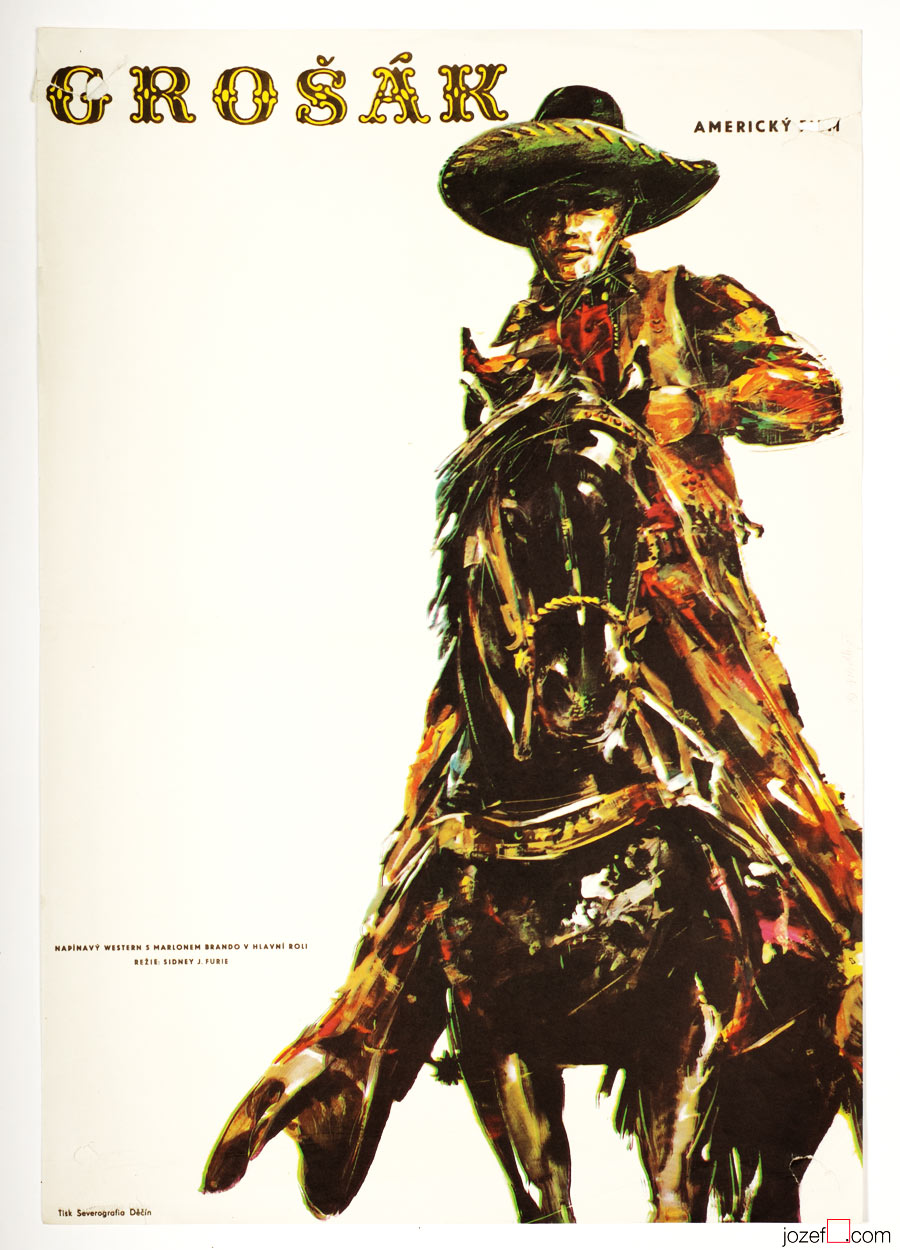
Sixties poster design brought in many interesting artists coming also from other art disciplines. Czech illustrator, graphic and poster artist Vladimír Bidlo is certainly one of them. His adventurous repertoire of film posters starts somewhere in the beginning of 1960s and extends to the mid 1970s. Vladimír Bidlo’s film posters are proving his incredible talent for drawing and illustration (The Appaloosa, below). He also falls for photography and mix the two delicately as can be seen on his earlier film posters.
***
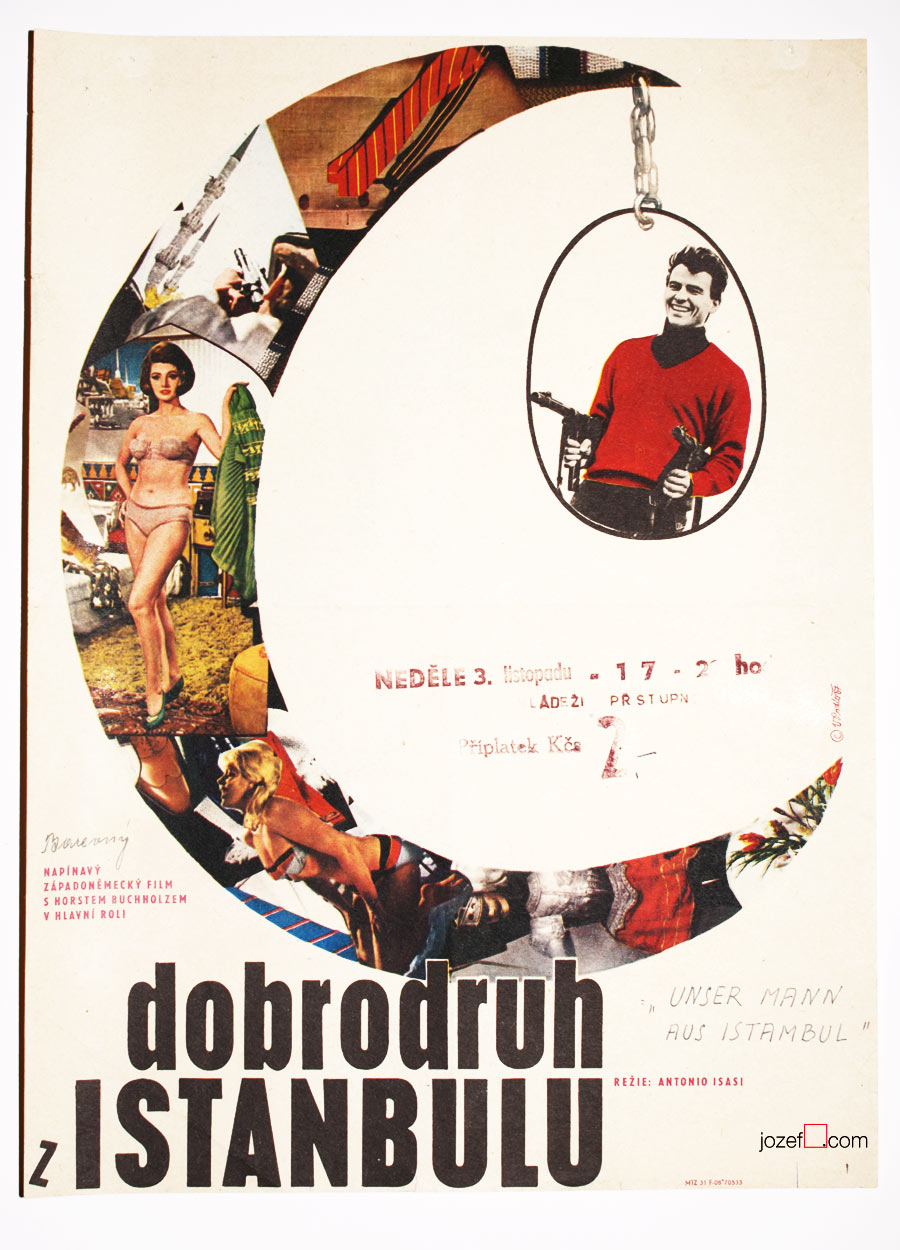
That Man in Istanbul movie poster by Vladimír Bidlo, 1967.
Viva Maria movie poster by Vladimír Bidlo, 1967.
The Firemen’s Ball movie poster by Vladimír Bidlo, 1967/1988.
The Appaloosa movie poster by Vladimír Bidlo, 1970.
***
We believe poster design for Miloš Forman’s The Firemen’s Ball had to resonate together with the film on its premiere in Cannes 1968, poster depicts the film perfectly. Too controversial for the Communists, film was banned and reappeared again by the end of the 1980s, same for the poster. Film posters created for majority of banned films were designed by the most appealing artists of the time. It is hard to tell if designing of film posters for censored movies had any effect on their future art profession. Vladimír Bidlo’s main focus laid on book illustration and after producing several dozens of excellent film posters he fully returned to that.
***
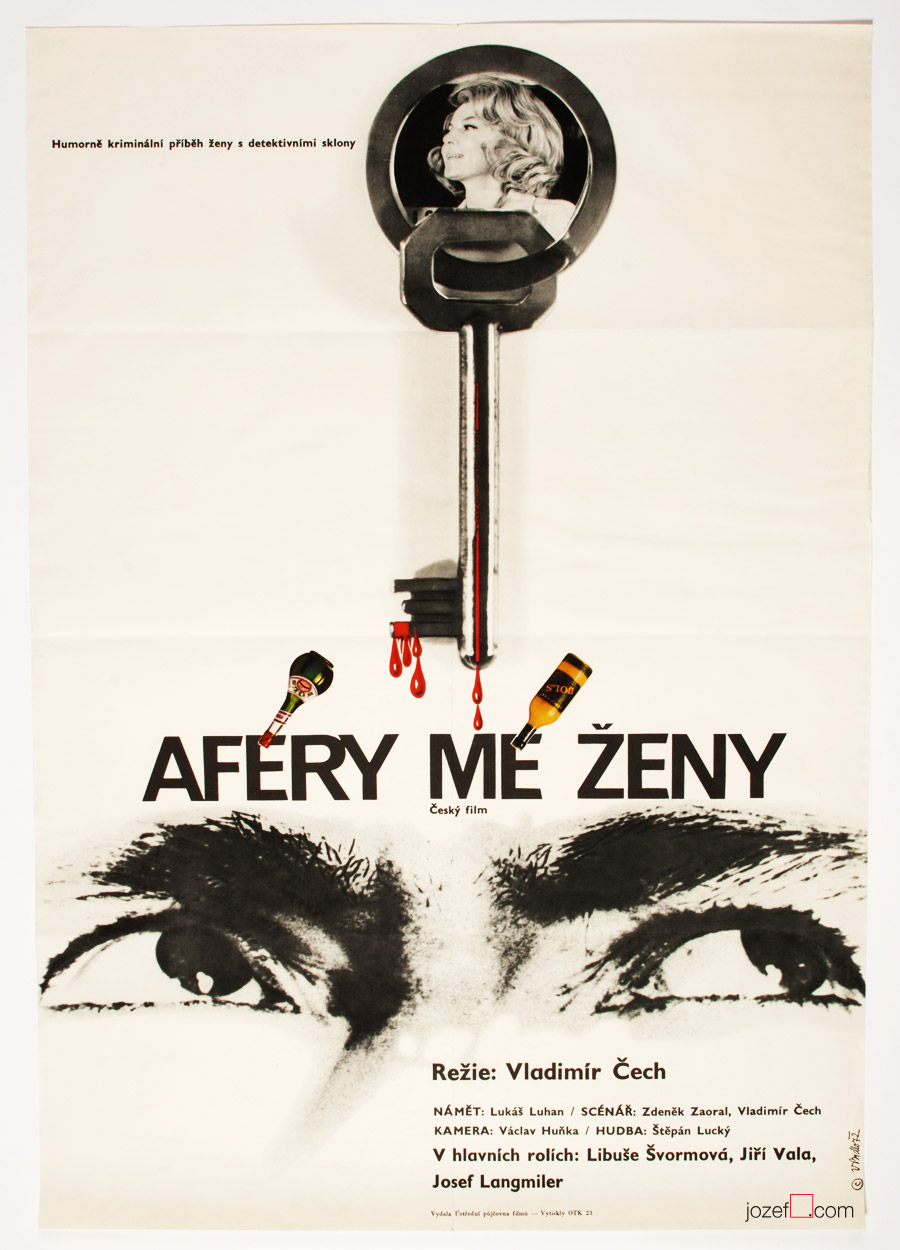
My Wife’s Affair movie poster by Vladimír Bidlo, 1972.
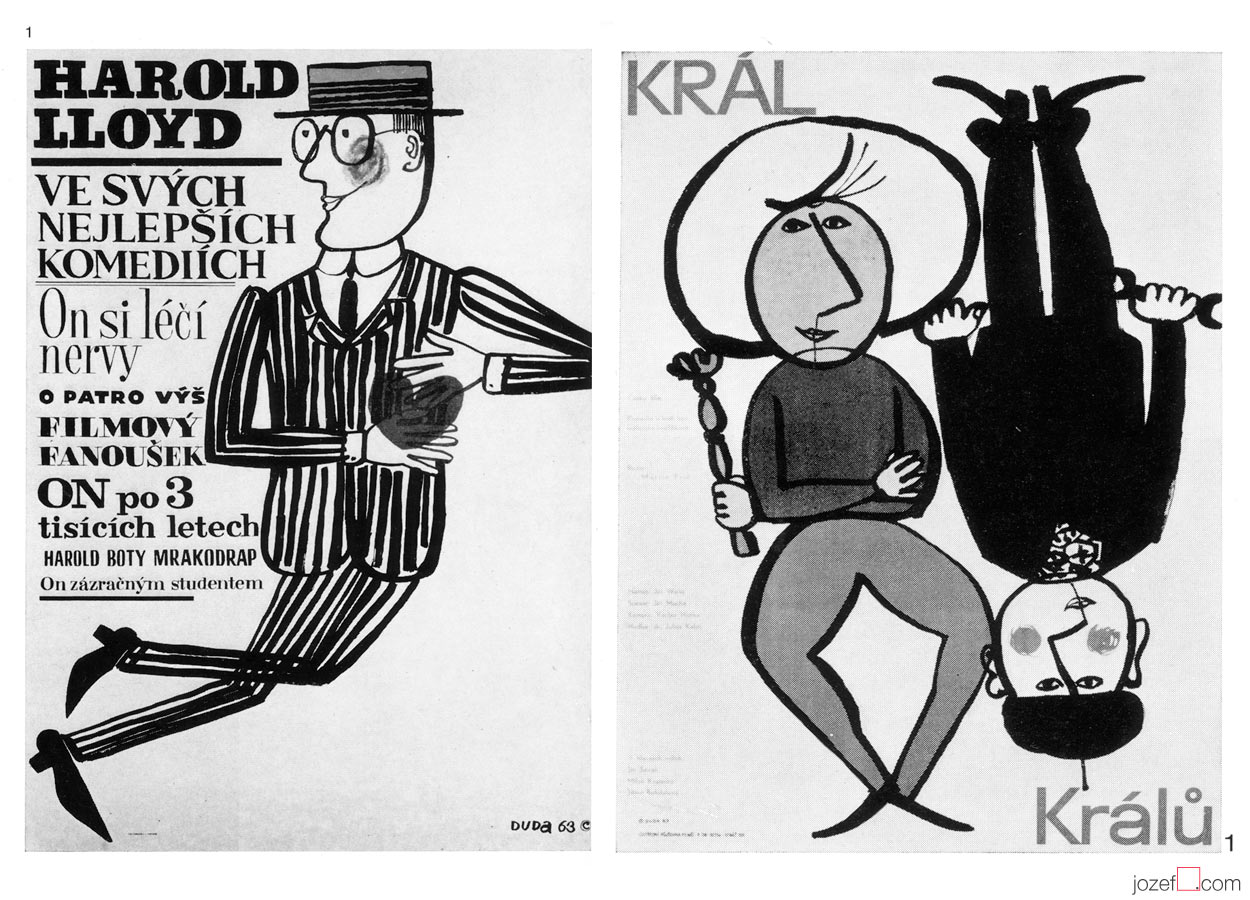
Harold Lloyd in His Best Comedies, 1963 / The King of Kings, 1963. Exhibition catalogue excerpt, Munich, 1965.
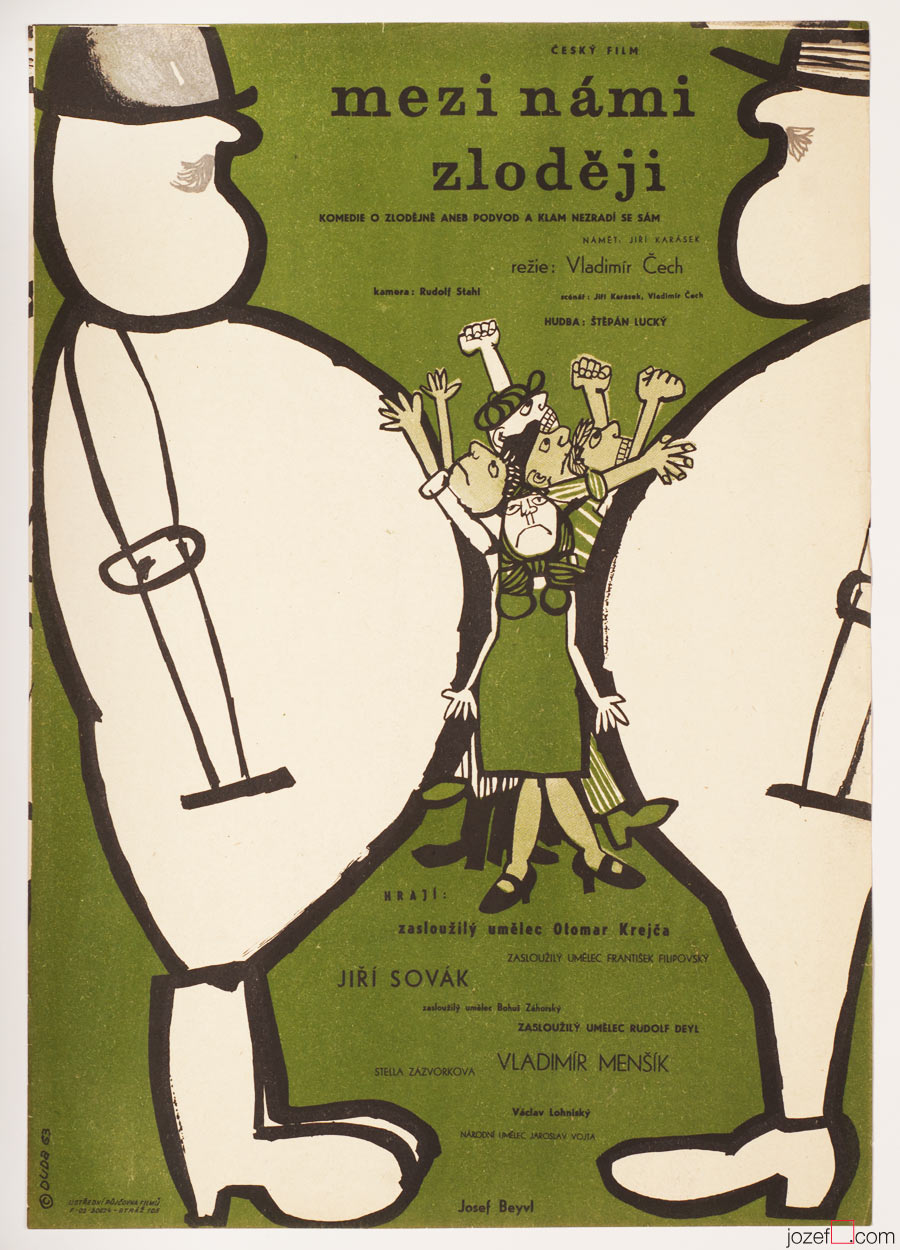
Welcome to the humorous world of Stanislav Duda, possibly one of the longest lasting poster designer Czechoslovakia had on offer. His poster activities are dating to late 40s, where he gained several awards for his commercial poster designs. [^7] Stanislav Duda begins to work professionally right after his graduation as graphic designer in Centrotex company (import / export of mostly textile products) where he stayed until 1953. From then onwards he works on his own as freelancer. He takes part in several group exhibitions representing graphic art from Czechoslovakia and also participates on International Exposition in Brussels (EXPO 58), where Czechoslovakia won prize for the best pavilion.
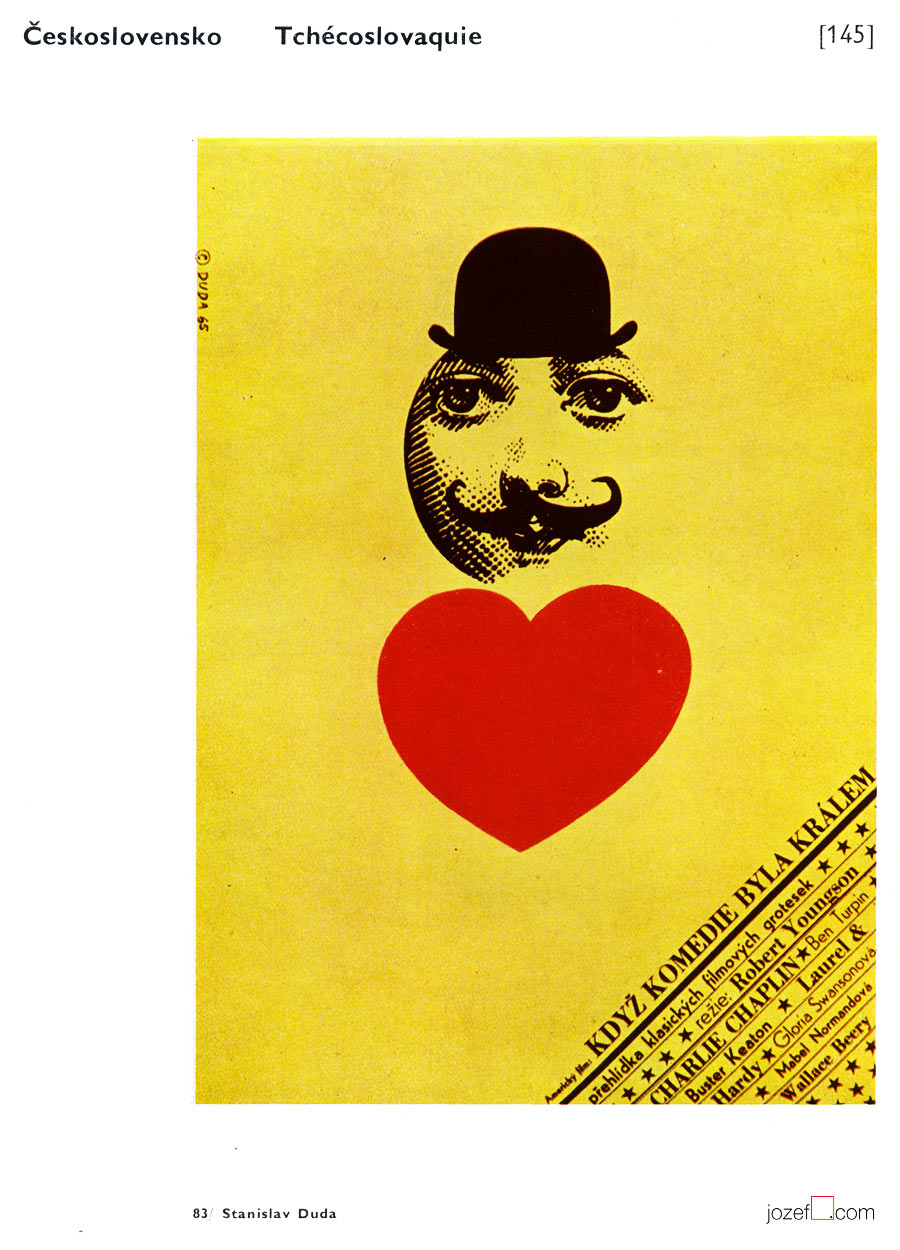
By the beginning of 1960s when Stanislav Duda started designing movie posters he was already well established graphic artist. Not sure if it was just by mere coincidence or because of his personal character, but it seems that majority of his 1960s movie posters were designed mostly for grotesque comedy (most of the posters shown in the article). Parallel to his illustrated caricatures that could be seen in several popular periodicals or art magazines, one can suggest that circumstances were working in his favour.
When Comedy Was King / Stanislav Duda, 1965. Brno Biennials catalogue excerpt, 1970.
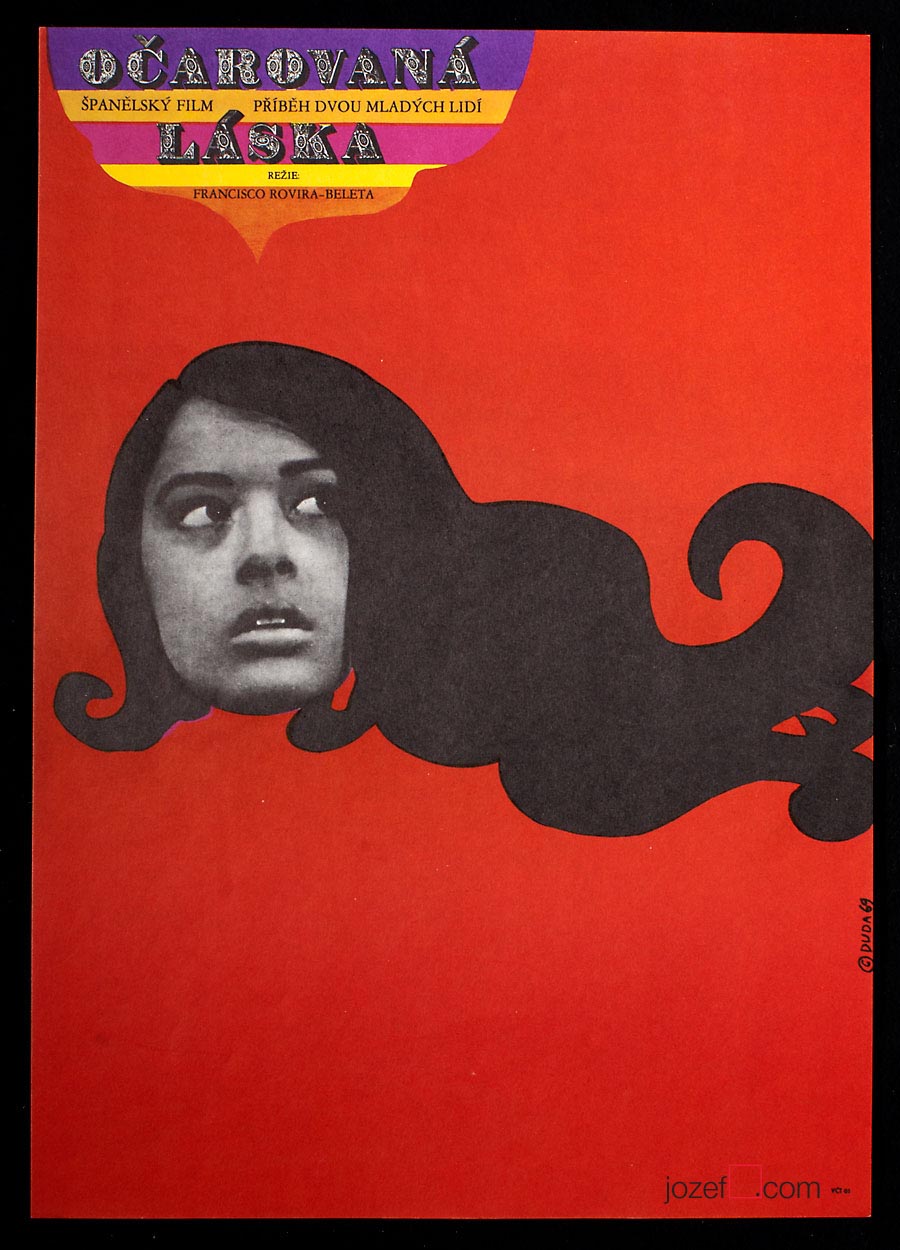
It is interesting to observe artist’s development through out his career. Stanislav Duda remained faithful to drawing all the way to mid 1980s. Apart of occasional use of very simple collage (Bewitched Love, 1969 (bellow) / Dead Men Don’t Wear Plaid, 1985) or his phenomenal movie poster for Francois Truffaut’s Day for Night (great example of his graphical abilities) he was focused mainly on illustration and experimented a lot with fonts and colour. Eventually he also takes control over typography and masters everything in very unique almost childish quality of naive artist as can be seen in his later poster designs.
Movie poster Bewitched Love / Stanislav Duda, 1969.
Stanislav Duda was author of several animated films and illustrated a good number of books for both children and adults. His work brought him a world recognition in pretty much everything he has touched. He has designed around thirty movie posters all with genuine signature and obtained some important movie poster awards.
Many other magnificent posters by Stanislav Duda can be observed in our movie poster archive.
***
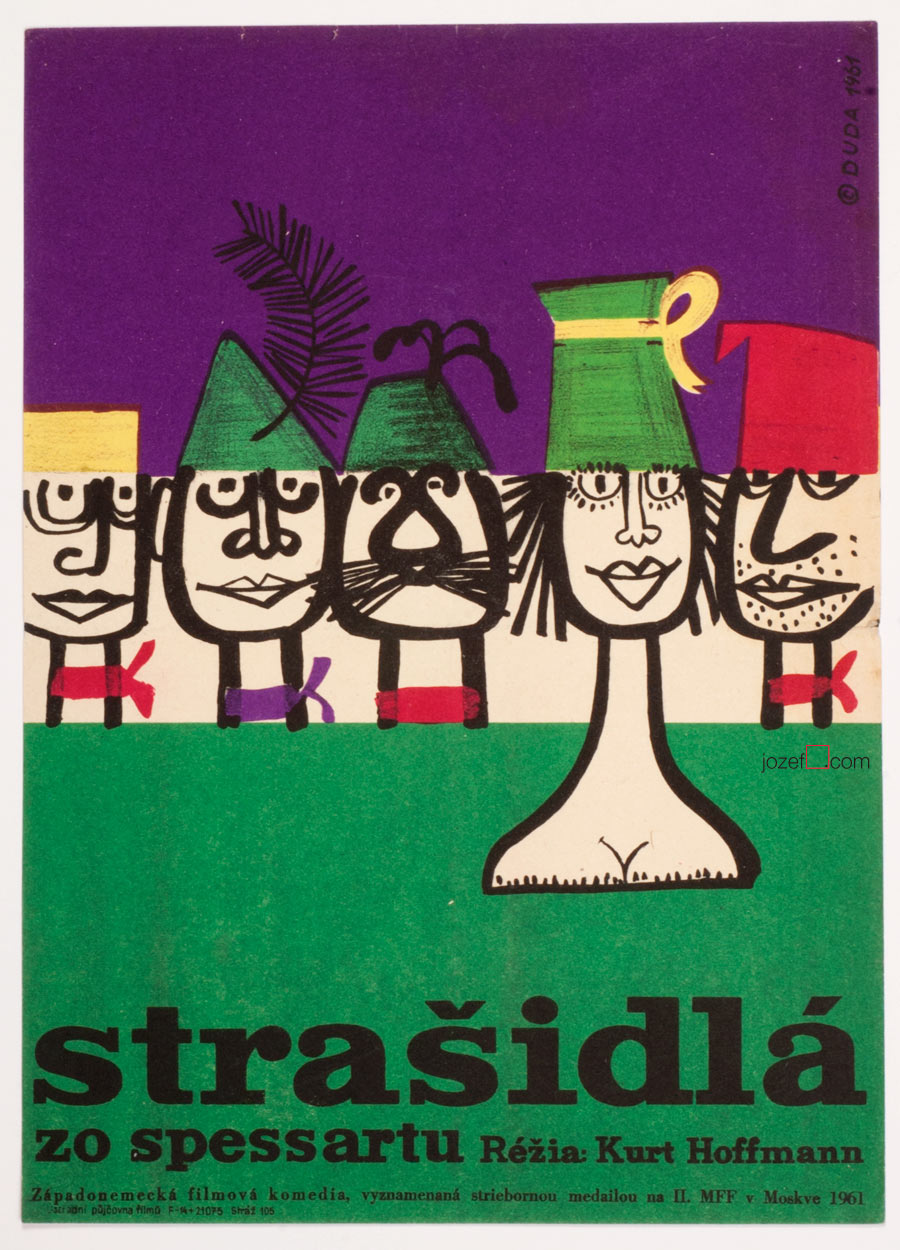
The Haunted Castle movie poster designed by Stanislav Duda, 1961.
***
Resources:
Literature:
II. Bienále Užité Grafiky Brno ’66, Medzinárodní Výstava Knižní Grafiky a Ilustrace, Moravská Galerie v Brně. / 2nd Biennale of Graphic Design Brno ’66, The International Exhibition of Book Graphics and Illustrations, Moravian Gallery Brno, 1966
[^3]:[^5]: IV. Bienále Užité Grafiky Brno 1970, Medzinárodní Přehlídka Plakátu a Propagační Grafiky, Moravská Galerie v Brně. / 4th Biennale of Graphic Design Brno 1970, The International Exhibition of Poster and Promotional Graphics, Moravian Gallery Brno, 1970 (p.41)
V. Bienále Užité Grafiky Brno 1972, Medzinárodní Výstava Ilustrace a Knižní Grafiky, Moravská Galerie v Brně. / 5th Biennale of Graphic Design Brno 1972, The International Exhibition of Illustrations and Book Graphics, Moravian Gallery Brno, 1972
VII. Bienále Užité Grafiky Brno 1976, Mezinárodní výstava ilustrace a knižní grafiky, Moravská Galerie v Brně. / 7th Biennale of Graphic Design Brno 1976, The International Exhibition of Illustrations and Book Graphics, Moravian Gallery Brno, 1976
IX. Bienále Užité Grafiky Brno 1980, Medzinárodní Výstava Ilustrace a Knižní Grafiky, Moravská Galerie v Brně. / 9th Biennale of Graphic Design 1980, The International Exhibition of Illustrations and Book Graphics, Moravian Gallery Brno, 1980
[^6]:Současná světová grafika, Deset brněnských bienále / The World Graphic Design at the Ten Brno Biennials, Jiří Hlušička. Odeon, Praha, 1985 (p.272)
[^7]: 1948, 1949, 1955 – 1st, 2nd & 3rd Prize for commercial poster design. IV. Bienále Užité Grafiky Brno 1970, Medzinárodní Přehlídka Plakátu a Propagační Grafiky, Moravská Galerie v Brně. / 4th Biennale of Graphic Design Brno 1970, The International Exhibition of Poster and Promotional Graphics, Moravian Gallery Brno, 1970 (p.41)
[^4]: Exhibition Catalogue: Plakate aus der Tschechoslowakei / Posters from the Czechoslovakia. Münchner Stadstmuseum, Munich, West Germany, 16.2 − 20.3. 1965. Texts: Alena Adlerová & Johanna von Herzogenberg.
Online:
[^1]: abArt / Stanislav Duda / Most of the biographical details are coming from AbArt’s archive unless otherwise referred.
[^2]: AbArt / Group of Artists and Graphic Designers established in Prague between 1957 − 1968. Main activities were exhibitions of group members in Czechoslovakia and abroad.
Article about exhibition Plakate aus der Tschechoslowakei / Posters from the Czechoslovakia, Munich, West Germany (1965) was printed in Gebrauchsgraphik Magazine, January/1965 and is available thanks to International Advertising & Design DataBase (pages 46-60).
Harold Lloyd in His Best Comedies, 1963 / The King of Kings, 1963. Exhibition Catalogue: Plakate aus der Tschechoslowakei / Posters from the Czechoslovakia. Münchner Stadstmuseum, Munich, West Germany, 16.2 − 20.3. 1965. Texts: Alena Adlerová & Johanna von Herzogenberg
When Comedy Was King / Stanislav Duda, 1965.Exhibition Catalogue: IV. Bienále Užité Grafiky Brno 1970, Medzinárodní Přehlídka Plakátu a Propagační Grafiky, Moravská Galerie v Brně. / 4th Biennale of Graphic Design Brno 1970, The International Exhibition of Poster and Promotional Graphics, Moravian Gallery Brno, 1970 (p. 145)
***
For shop and blog highlights, please SUBSCRIBE to our weekly newsletter.
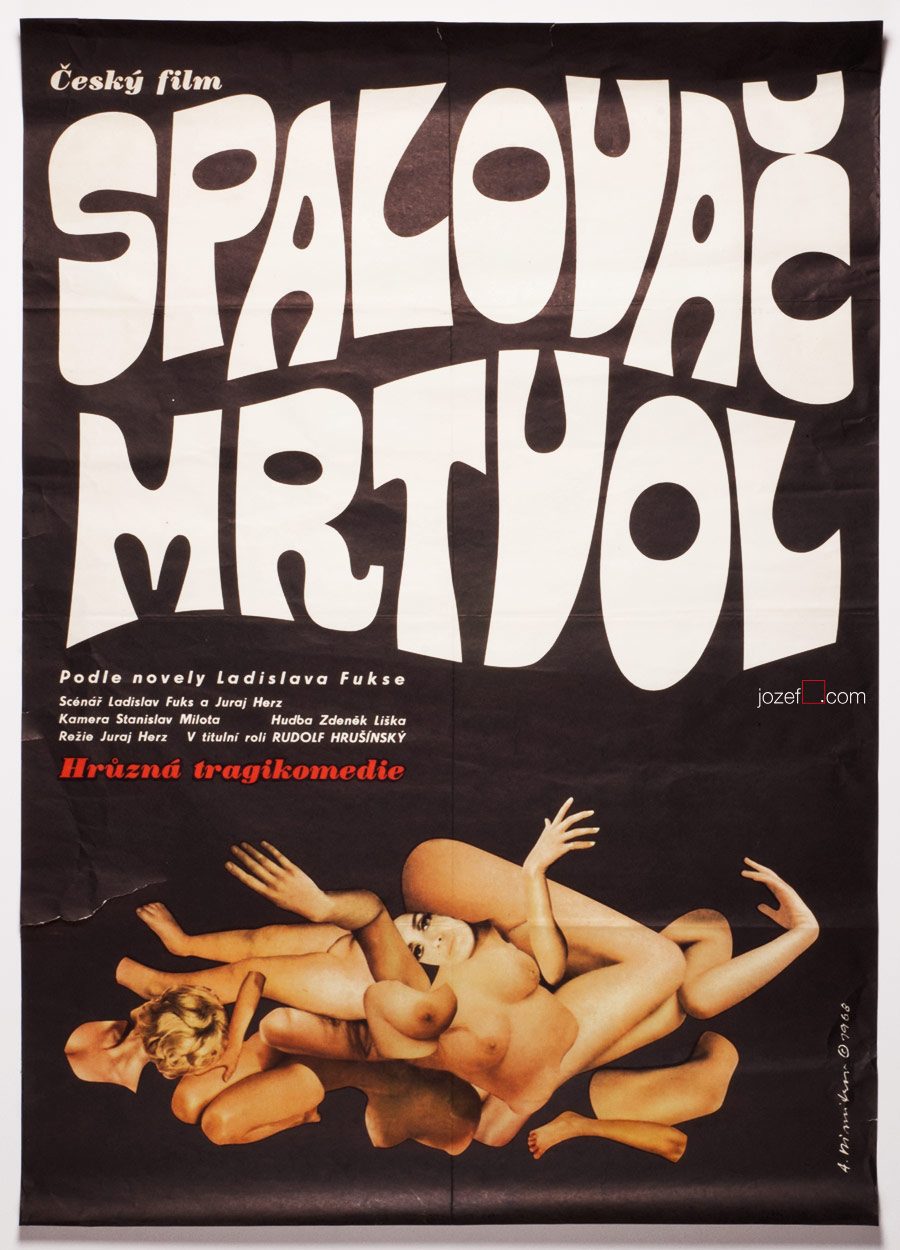
The Cremator movie poster by Antonín Dimitrov, 1968.
***
b. 27th February 1928, Mšecké Žehrovice/Rakovník, Czech Republic
d. 27th December 2014, Bobcaygeon, Canada
lived in Canadian exile from 1968
Education:
1945 – 1953, Academy of Arts, Architecture and Design in Prague (Antonín Strnadel)
Exhibitions:
until 1968 mostly Prague exhibitions
Toronto, Royal Canadian Academy of Arts (member), Canada, 1991
London / United Kingdom
***
In few of our recent articles we have discussed absurdity and inappropriate behaviour of Communist leaders. Terrifying act of those in power and their constant fight towards fictional enemy was very systematical. In country as small as Czechoslovakia it was not impossible to succeed.
***
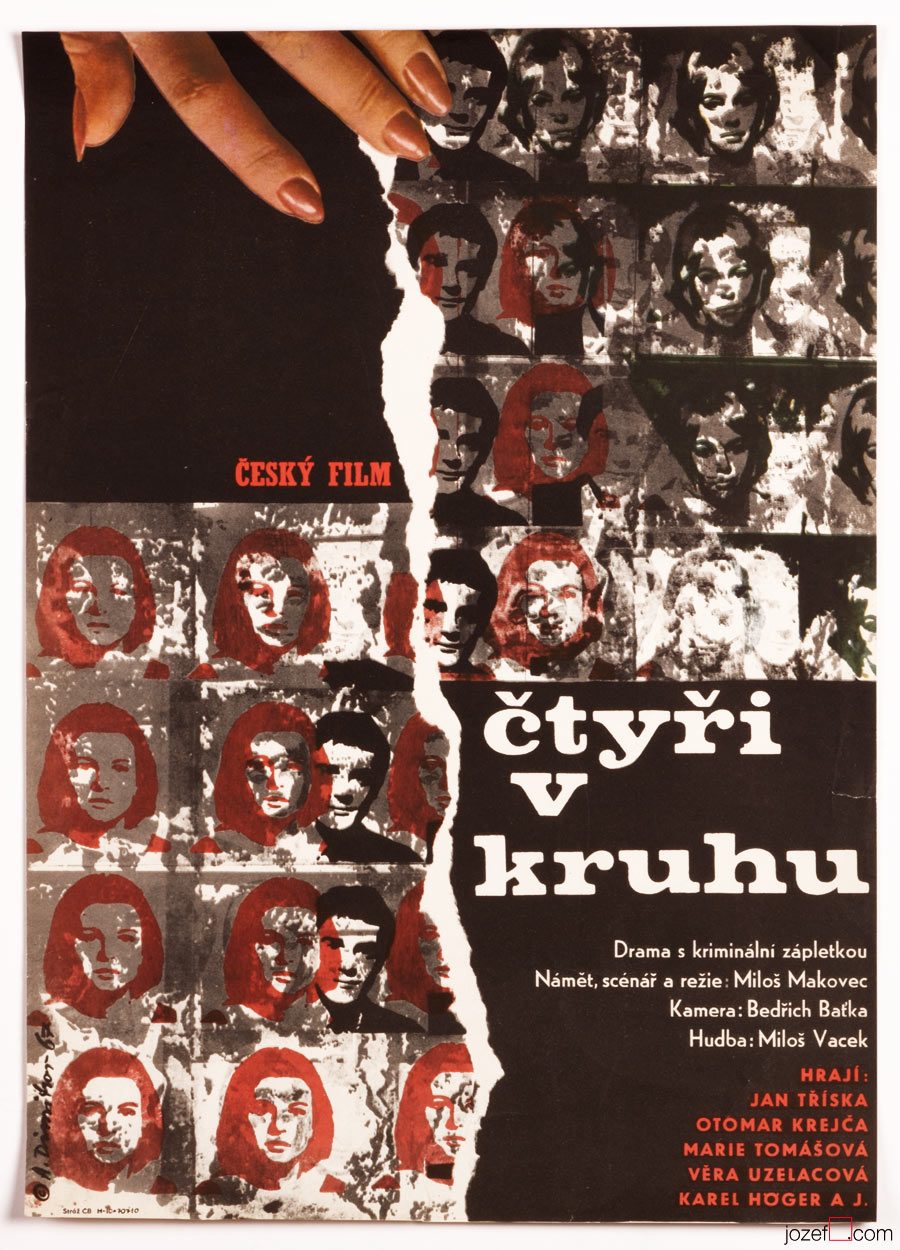
Four in a Circle movie poster by Antonín Dimitrov, 1967.
***
Similarly to Jan Brychta, Antonín Dimitrov’s profile was simply deleted. Second successful attempt of leaving the country in 1968 took Antonín Dimitrov with his wife Olga to Canada. His first try when he and his soul mate swam across the river Danube to neighbouring Austria, just to get caught and handed in to Russian soldiers, cost him several years in prison and forced labor.
Before their disappearance, Antonín Dimitrov and his wife worked professionally as a set and costume designers in various theatres across the country. Antonín’s rebellious nature has been proved several times. Exclusion from the Art Academy for his incorrect political views (note: even the students had to be the members of Communist party. Same applied to parents, if there was a non member in the family, studying at higher education was impossible. Not talking of grand parents.) and his unsuccessful immigration right after that are only few examples of his misbehaviour.
***
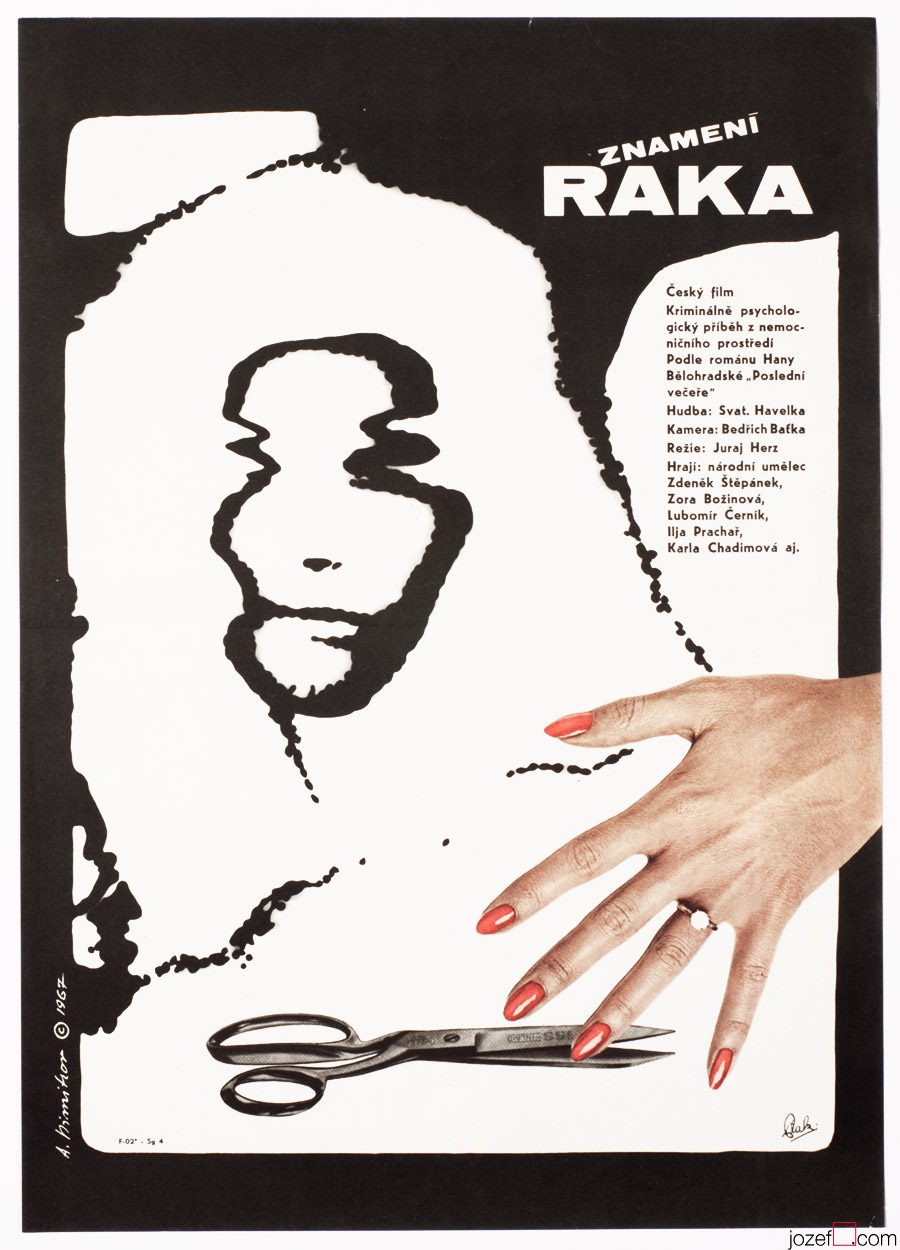
Sign of the Cancer movie poster by Antonín Dimitrov, 1967.
***
His collaboration with Czechoslovak New Wave directors, specially with Juraj Herz must have also spiced the soup up. Juraj Herz’s Cremator was the movie Communist could not swallow, similarly to other two titles in the showcase. In cases when the Communists decided to ban the movie everything would go off the shelf. Film director, author of the script / writer and the same destiny would meet the film poster.
Movie posters of Antonín Dimitrov are reflecting the times utterly. His posters are incredibly attractive, no matter if he touches the scissors or the paint brush. Excellent typographer and master of the blend, his virtues are sensibly hidden mostly in the collage. His posters are missing on one thing, there are only very few of them. He possibly did not design more than ten movie posters.
***
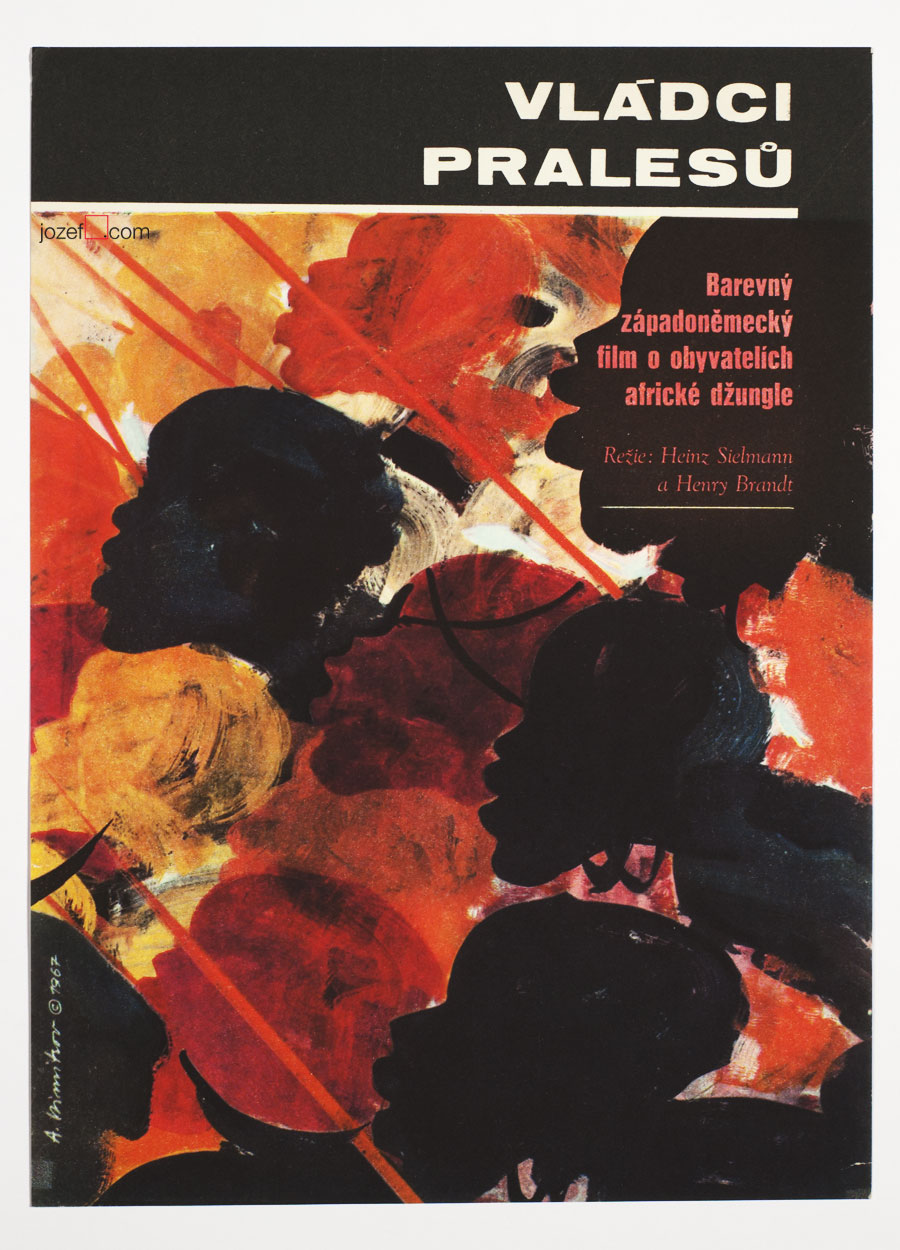
Masters of Congo Jungle movie poster by Antonín Dimitrov, 1967.
***
Even though Antonín Dimitrov luckily led succesful life in the exile. As a set designer he and his wife worked on numerous theatre and opera productions. He was also head of the design programme at the prestigious Indiana University School of Music in Bloomington, Indiana[^1] . But for Czechoslovak film poster his departure was a great loss. Many fascinating artists remained and learn how to overcome the situation, while building one of the most impressive poster archive in design history. It would be truly interesting to see what else could Antonín Dimitrov pull out of that hat.
***
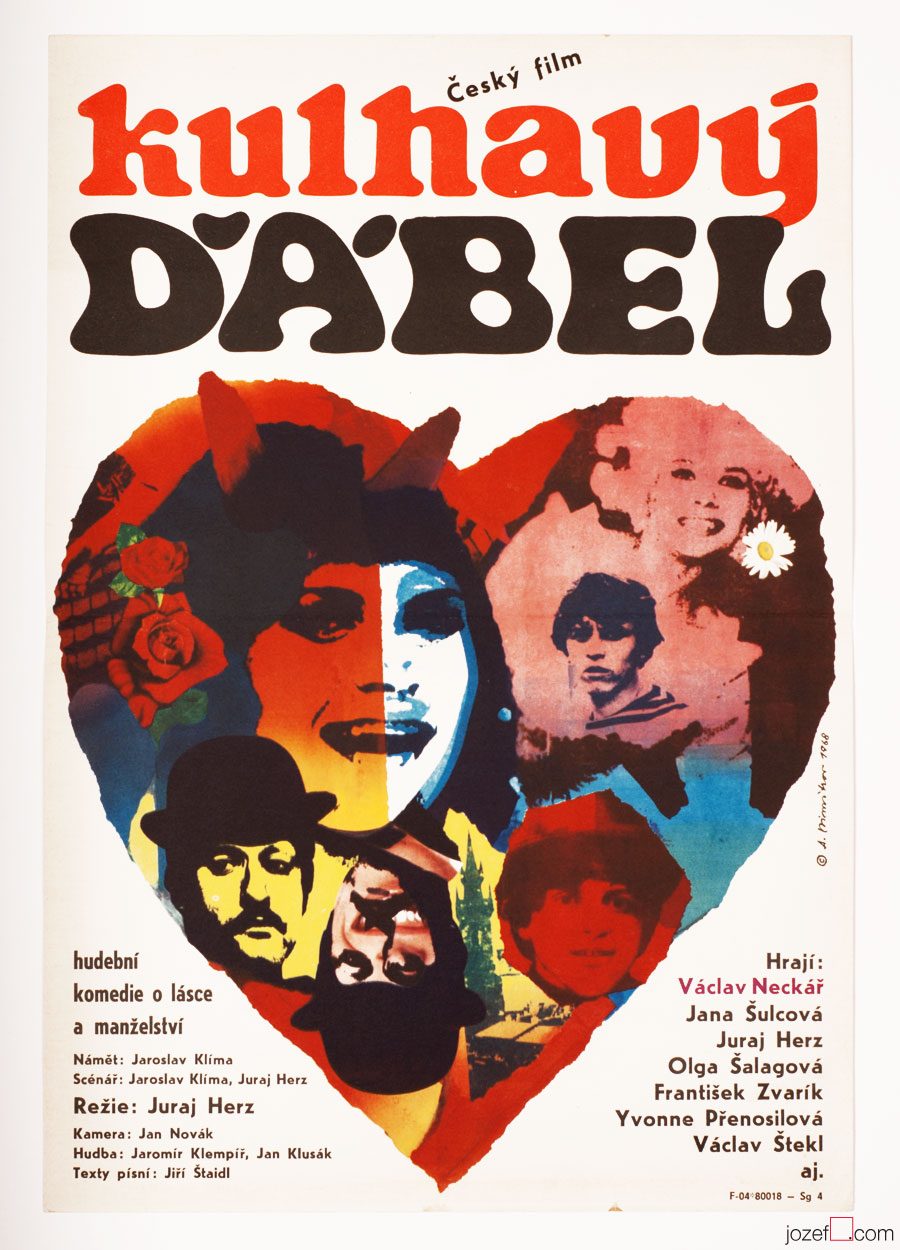
The Limping Devil movie poster by Antonín Dimitrov, 1968.
[^1]: Obituary of Antonin Dimitrov, Hendren Funeral Homes, Norwood and Bobcaygeon, Ontario / it is sad when only biography on artist can be found in his obituary. Beautifully written, one should take a look.
***
For shop and blog highlights, please SUBSCRIBE to our newsletter.